
What if 65% of software bugs that reach production were never tested for? Not because QA teams are careless, but because predicting every edge case is humanly impossible. That’s the pressure reshaping modern software testing services. Humans test expected paths—AI attacks the strange ones, where the most expensive bugs hide.
Traditional QA focuses on how software should be used. AI-assisted testing focuses on how software is actually abused. Modern testing platforms simulate millions of unpredictable users, hammering applications in ways no manual test plan ever could.
Forget buzzwords like “paradigm shift.” This is simply common sense enabled by better tools. We finally have technology capable of testing the chaotic behavior real users bring to real applications.
I witnessed this firsthand when an AI testing system uncovered a security flaw that allowed users to unlock premium features for free. The exploit required clicking buttons in a precise order while switching between Wi-Fi and cellular data—an absurd sequence no human tester would imagine. A user had already shared the trick online. The AI discovered it independently by exploring millions of interaction patterns.
At AD Infosystem, we’ve seen how AI transforms testing from educated guesswork into repeatable science. The days of crossing your fingers and hoping coverage is enough are over. AI relentlessly probes your application, trying every illogical action a user might attempt—and users are far more creative than you think.
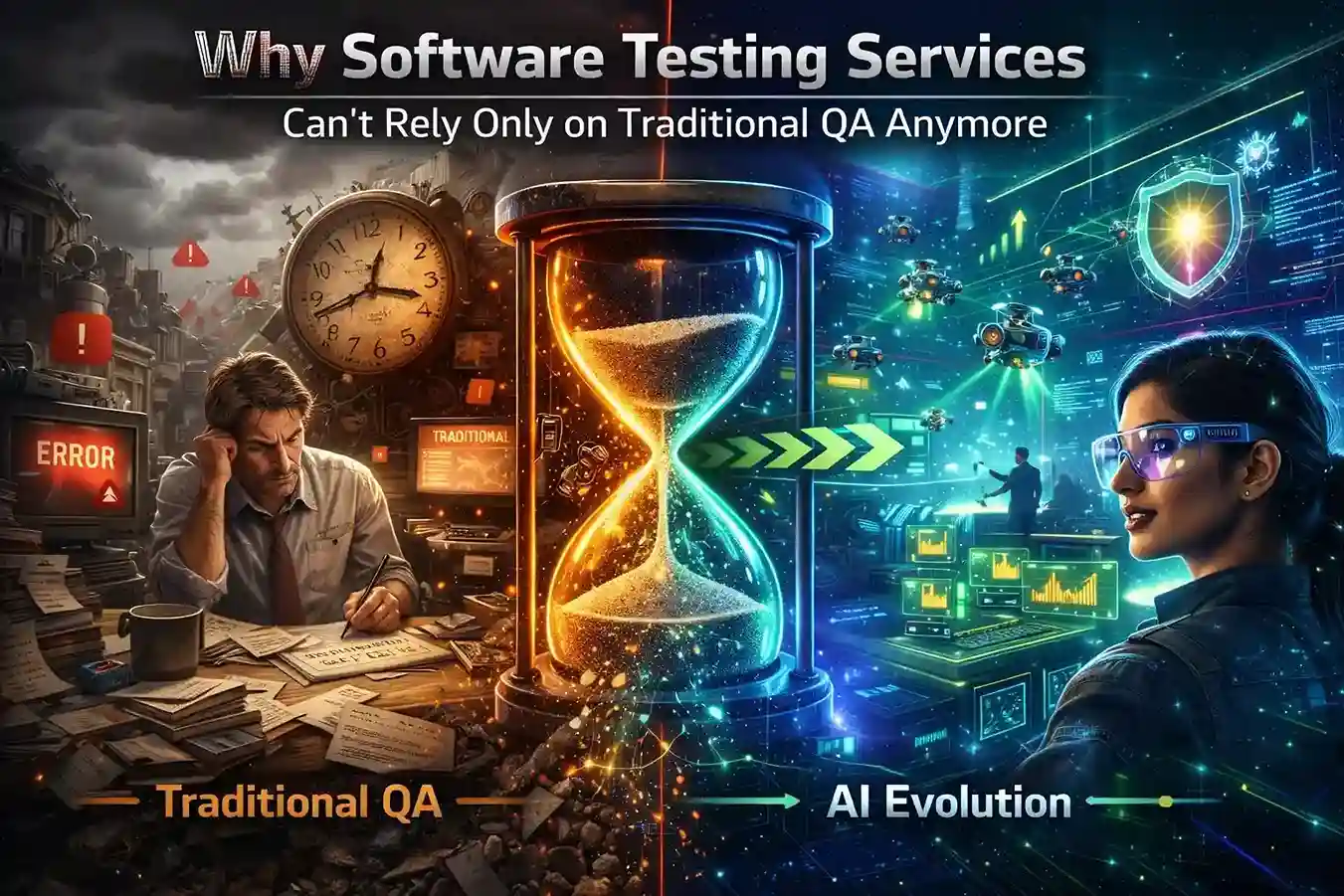
Software has become dramatically more complex. A decade ago, testing meant checking buttons and form submissions. Today, the average application integrates with dozens of services, runs across multiple platforms, and ships updates several times a week.
I learned this the hard way at a startup where five experienced QA engineers manually tested a payment platform. They followed every test case, worked long hours, and documented everything thoroughly. Despite that, a critical bug slipped into production and caused $50,000 in failed transactions.
The issue only occurred when European users attempted payments during U.S. market hours, using Firefox on tablets. No human tester would reasonably think to validate that exact combination.
That’s the core limitation of traditional QA—it assumes user behavior is predictable. In reality, modern applications exist in millions of possible states. Trying to test them manually is like attempting to empty the ocean with a spoon.
Traditional testing worked well in 2010. In 2026, it struggles. Across most organizations, QA teams are buried in test cases, developers wait days for feedback, and bugs still make it to production.
The math no longer works. Imagine an application with 100 features. If each feature interacts with just 10 others, that’s already 1,000 interaction points. Add browsers, devices, user types, and data states, and you’re dealing with millions of possible scenarios. your QA team of 10 people? They can realistically test only 1% of that.
Manual testing also suffers from repetition fatigue. Run the same test dozens of times and the brain switches to autopilot. Even experienced testers start overlooking issues—not due to lack of skill, but because human attention simply isn’t designed for endless repetition.
AI testing changes everything—but it’s not just faster automation. Traditional test automation behaves like a very fast, very literal robot. It does exactly what it’s told, breaks easily, and can’t adapt when something unexpected happens.
AI testing, by contrast, learns and adapts. The first time I saw it in action, it was testing an eCommerce site with no predefined scripts. The system independently discovered the checkout flow, experimented with multiple payment methods, combined discount codes, tested expired cards, and entered incorrect CVV values—essentially behaving like the most persistent customer imaginable. It uncovered bugs manual testers had never considered.
The real power emerges when AI starts identifying patterns. It observes how real users behave, then aggressively tests those same behaviors at scale. At one fintech company, AI continuously monitors code changes. The moment a developer modifies payment logic, the system automatically launches thousands of payment scenarios.
Instead of waiting for scheduled test cycles, AI relentlessly probes applications in real time—catching issues at the moment risk is introduced.
Let me pull back the curtain on AI testing. Visual AI testing has transformed how UI bugs are detected. Instead of verifying whether an element exists at a specific coordinate, AI understands how the application should look and behave—catching issues like a “Buy Now” button disappearing in dark mode.
Predictive defect detection may sound complex, but the idea is simple. AI learns from historical bug data and code changes. If modifying the authentication module consistently leads to password reset failures, the system prioritizes testing in that area. One client reduced critical defects by 60% simply by allowing AI to focus testing where risk was highest.
Self-healing tests address one of automation’s biggest pain points: maintenance. Traditional automated tests break whenever the UI changes. AI-driven tests understand intent—such as “submit the form”—rather than relying on fixed selectors. When layouts shift, tests adapt automatically, eliminating constant rework and late-night fixes.
Let’s talk real numbers—because that’s what matters. Companies using AI-powered software testing services are seeing dramatic gains. One retail client reduced testing cycles from three weeks to just three days. That’s a 90% improvement, enabling weekly releases while competitors still ship quarterly.
Bug detection rates tell an even stronger story. Traditional manual testing typically catches around 35% of defects before release. AI-powered testing pushes that number to 85% or higher. Fewer bugs mean fewer angry customers, fewer emergency patches, and fewer late-night firefights.
Cost savings add up fast. Yes, AI testing tools cost money upfront. But one prevented production bug saves more than a month of AI testing costs. One client calculated that AI testing saved them $2 million annually in support costs alone.
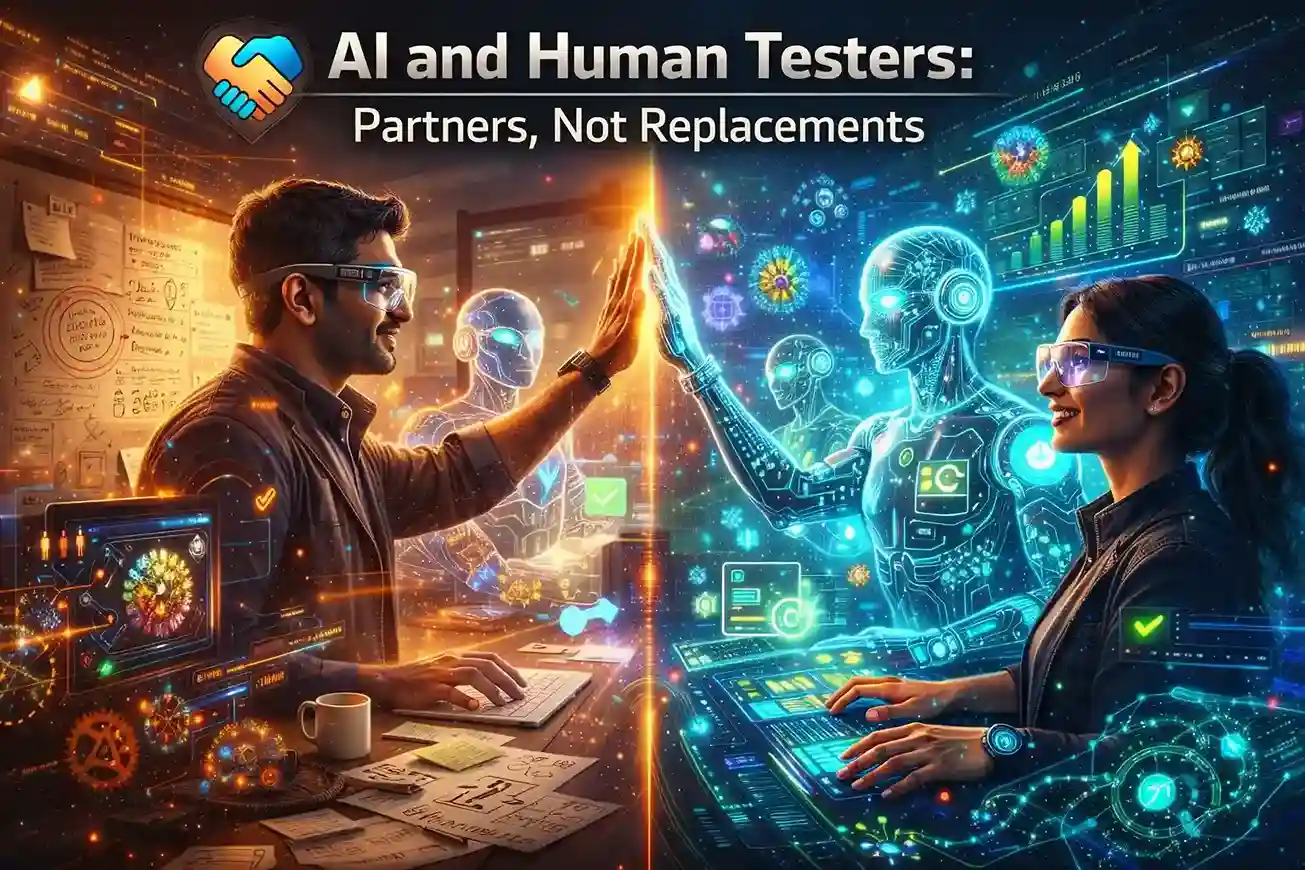
Every QA professional asks the same question: “Will AI replace me?” The short answer is no. The longer answer is that AI makes the role far more interesting and impactful.
AI excels at repetitive, high-volume tasks—running regression suites, testing endless browser and device combinations, and validating API responses without fatigue. What AI cannot do is judge whether a feature actually makes sense to real users or solves a genuine human problem.
The most effective testing teams treat AI like a super-powered intern. AI takes over the tedious, repetitive work that burns people out. Human testers focus on higher-value thinking—exploring edge cases, validating user experience, and designing smart test strategies.
QA professionals who embrace this partnership don’t get replaced—they level up. They spend less time clicking buttons and more time shaping software quality where it truly matters.
Remember when DevOps promised lightning-fast releases? Then testing became the bottleneck and slowed everything down. AI testing is finally delivering on that original promise.
In modern CI/CD pipelines, AI testing runs continuously. When a developer commits code, AI immediately executes the most relevant tests. This shift-left approach surfaces defects within hours instead of weeks.
In one real-world example, a SaaS company reduced its testing cycle from 48 hours to under two hours—allowing teams to release faster without sacrificing quality.
Not all software testing services are created equal. Be cautious of anyone claiming AI solves everything. Strong automated software testing providers are transparent about both capabilities and limitations.
Look for proven experience within your industry and ask detailed questions about their implementation approach. The best providers don’t just sell tools—they focus on outcomes and long-term success.
Enterprise-grade software testing services require more than technology alone. Choose a partner who understands organizational change and can guide teams through adoption, not just deployment.
The future of software testing services is already taking shape. Autonomous testing systems are beginning to explore applications independently, while predictive analytics identify defects before code is even written. Soon, testers will be able to say, “Test the checkout process,” and the system will handle the rest.
As a result, the QA role is evolving from “bug hunter” to “quality architect.” Instead of discovering issues after release, tomorrow’s QA professionals will embed quality into every stage of development from day one.
A software testing expert shares the hard truth about how AI has fundamentally changed the testing game. After watching a client lose $50,000 because manual testing missed a bizarre edge-case bug—triggered only when European users attempted payments during U.S. market hours on Firefox tablets—it became clear that human-led testing alone can’t keep up.
AI testing excels at uncovering the strange, unpredictable behavior humans rarely anticipate. From discovering premium-feature exploits caused by unusual user interactions to stress-testing applications across millions of possible states, AI explores paths no traditional test plan would ever include.
This guide explains how AI testing works in practice: visually inspecting applications to catch UI issues, learning from historical defect patterns to predict future failures, and automatically repairing its own tests when developers modify interfaces. With modern applications presenting millions of possible scenarios—and even elite QA teams covering only a fraction—this capability is no longer optional.
Organizations adopting AI-powered testing are releasing features weekly instead of quarterly, detecting over 85% of defects compared to roughly 35% with manual testing, and freeing QA professionals to focus on meaningful quality strategy instead of repetitive tasks. At AD Infosystem, we’ve seen AI transform testing from guesswork into a disciplined, scalable process that finally keeps pace with modern software development.