The technology leadership meeting started with uncomfortable silence. Our client, a fast-growing fintech company, had just lost their third senior developer in two months. Not to competitors offering better salaries, but to burnout from trying to handle too many projects simultaneously. With four critical initiatives stalled and investors growing impatient, they faced a choice that would define their next growth phase.
The Quiet Revolution: Fast forward to today, and the company runs itself differently at every level. Decisions that used to require three meetings and five spreadsheets now happen automatically. Problems that used to ambush them at month-end are now flagged and fixed in real time. The operations manager jokes that he's become gloriously bored—the highest compliment in manufacturing.
The numbers tell the real story: 40% of production planning now runs on autopilot, order processing has dropped from 4 days to 4 hours, and they've launched two entirely new revenue streams—a subscription service for regular customers and an express manufacturing option for rush orders. Revenue jumped 30% without adding a single person. Customer complaints dropped 80%. The sales team stopped selling on apologies and started winning on speed.
But here's what really matters: they built this transformation on foundations they already owned. No moonshot investments. No betting the farm on unproven technology. Just the radical act of making existing investments work together. They discovered their old SAP inventory module could forecast demand—no one had ever turned it on. Their shipping software could send automatic updates to customers—another dormant capability. Even their accounting package could integrate with e-commerce platforms, opening doors to online revenue they thought required starting from scratch.
The transformation wasn't about technology. It was about understanding that most companies are sitting on 80% of what they need to succeed. They need someone who can see the puzzle pieces and knows how to connect them. That's what separates expensive IT disasters from actual business transformation.
The biggest waste in business today? Companies where the business side and tech team may as well be in different buildings. The executives are up in the boardroom, drawing hockey-stick growth charts, while IT is downstairs goggling "what does digital transformation actually mean?" Nobody's talking to each other, so guess what happens? They blow millions on software that sits unused, install systems that make everyone's job harder, and meanwhile, the competition is stealing their customers while they're stuck in another planning meeting.
But watch what happens when companies bridge this gap. The corner bakery now ships artisan bread nationwide because someone connected their passion with the right platform. That local tax advisor? She's serving international clients from her home office. The manufacturer who used to stockpile "just in case"? Now they produce exactly what's needed, when it's needed.
These wins aren't about technology—they're about alignment. When business vision and technical capability sync up, magic happens. The challenge is translation. Business leaders dream of market opportunities and customer experiences. Tech teams think in systems and scalability. Without someone who speaks both languages fluently, you get expensive misunderstandings. The best advisors don't just translate—they've seen enough victories and disasters to guide you toward what actually works.
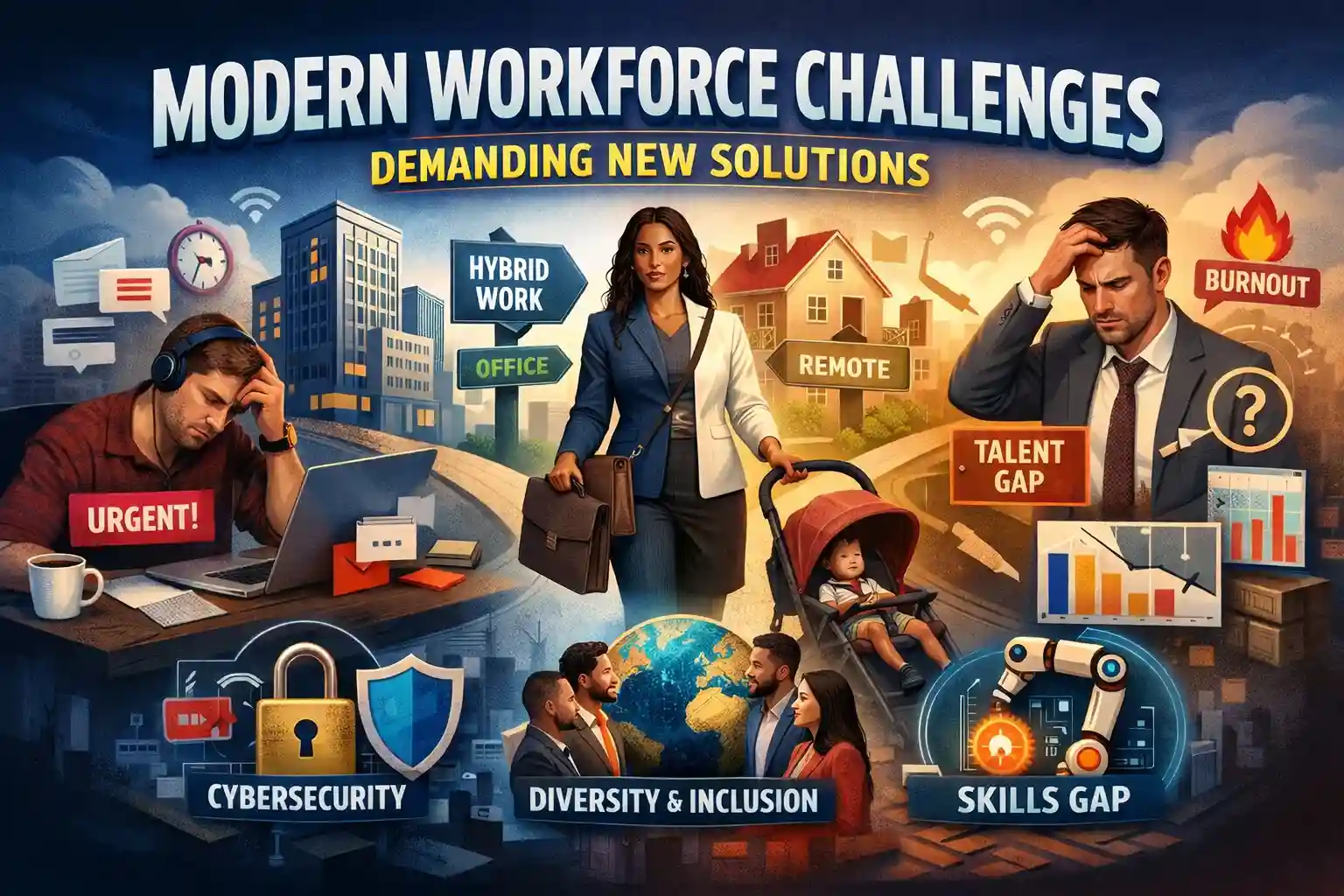
Something fundamental broke in the talent market during 2020, and it never got fixed. The old employment contract—stability for loyalty—was shattered. Now, technical talent treats jobs like projects: get in, make an impact, move on. The average tenure for specialized tech roles has dropped to 18 months. By the time your new hire is fully productive, they're already interviewing elsewhere. Companies have become expensive training grounds for their competitors.
This perpetual motion machine of job-hopping created a bizarre dynamic. Everyone's hiring, everyone's losing people, but nobody's actually gaining capability. It's like a giant game of musical chairs where the music never stops, but nobody can sit down. One tech executive described it as "renting talent at ownership prices." You pay premium salaries for people who were never going to stay, trying to build long-term capabilities with short-term players.
Can we get real for a minute? Companies don't choose staff augmentation because they're desperate or incompetent. They choose it because they've figured out something important: trying to keep every possible skill in-house is insane. It's like a hospital trying to keep brain surgeons, heart specialists, and tropical disease experts all on staff full-time, just in case.
I saw this play out with a consumer products company that spotted gold in voice commerce. They realized people would soon be ordering everything through Alexa, but they had maybe six months before Amazon changed the game or competitors woke up. Normal hiring? A minimum of 4 months to get someone started. Instead, they had voice interface experts building their system within two weeks. Result? They launched first, locked in key partnerships, and made millions while their competitors were still writing job descriptions.
Innovation projects love augmentation for a different reason. Say you want to explore blockchain, or quantum computing, or whatever the next big thing is. Hiring permanent experts is a massive gamble—what if the technology flops? I watched a pharmaceutical company handle this brilliantly. They brought in augmented teams to test four emerging technologies simultaneously. No permanent commitments, "show us what's possible." Two technologies proved game-changing; two were duds. They hired permanent teams only for the winners. Smart, clean, no expensive mistakes.
Digital transformation programs rely heavily on augmented expertise. These multi-year journeys require different skills at different phases. Architecture and planning experts start the journey. Implementation specialists handle the build. Change management professionals guide adoption. Optimization experts refine post-launch. Maintaining all these specialists permanently makes no financial sense. Augmentation provides the right expertise at the right time.
Startups live in a weird space. They need enterprise-level capabilities to compete, but they've got shoestring budgets and tiny teams. Every tech decision could make or break them.
I watched a fintech startup learn this the hard way. They had $2 million to build something that could process financial transactions for millions of users across multiple countries, all while keeping regulators happy. Their first instinct? Hire a bunch of developers and build everything themselves. That would've burned through their cash before they made a single sale.
Smart guidance flipped their thinking. Instead of building payment processing, they plugged into existing systems. Same with identity verification and compliance monitoring. They only built what made them special. Result? They hit the market 18 months faster and spent 70% less on infrastructure.
Small companies usually mess up in one of two ways. Either they duct-tape together consumer apps that fall apart under real business pressure, or they buy enterprise software built for companies 100 times their size. The trick is knowing what makes you different (build that) versus what everyone needs (buy that).
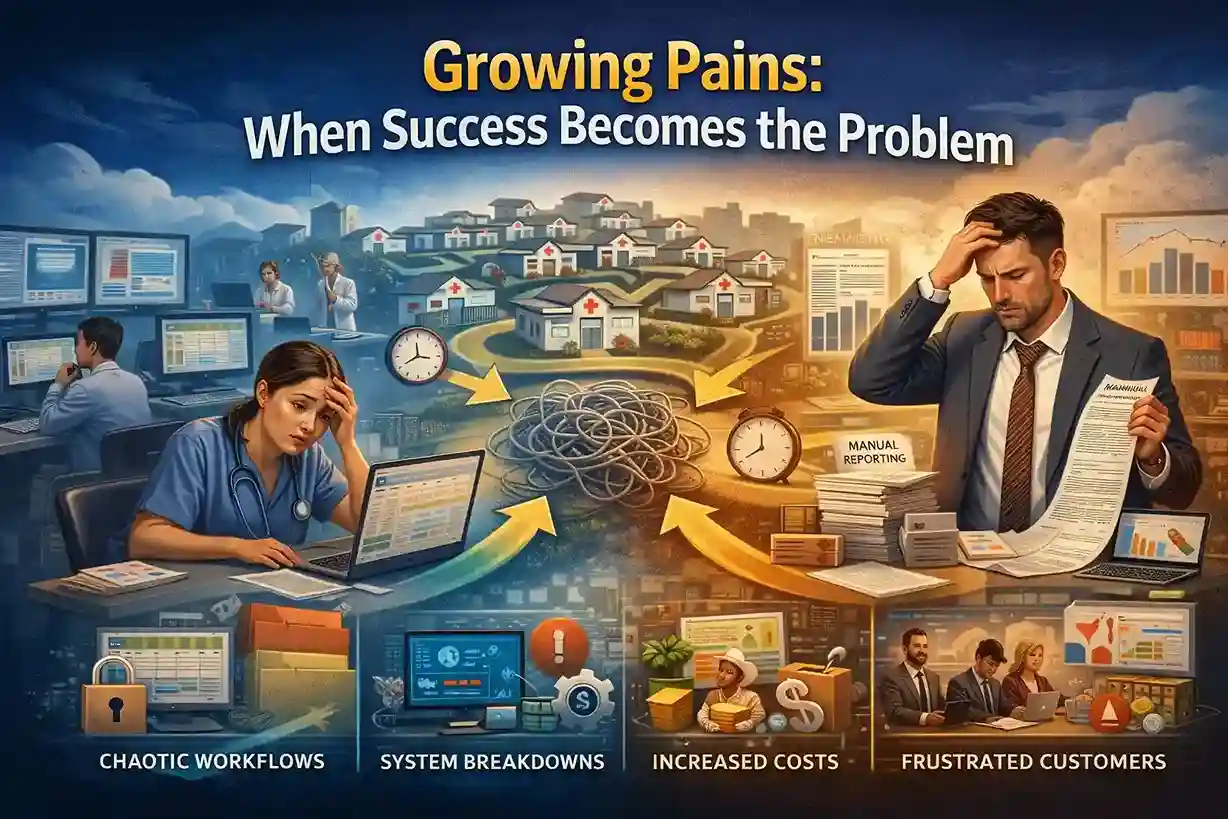
Growth is messy. The systems that work great for 50 people implode at 500. The setup that handles $10 million in sales chokes on $100 million. Those informal processes that made you nimble? Now they're strangling you.
I saw this with a healthcare company that grew from 3 clinics to 30 through acquisitions. Suddenly, they had 30 different ways to store patient records, billing was a nightmare of manual spreadsheet work, and getting a simple report took weeks. Success had created chaos.
The knee-jerk reaction is to force everyone onto one system immediately. Bad idea. Those different systems existed for reasons—local regulations, special capabilities, workflows that actually worked. You can't just steamroll over that.
Smart scaling means being surgical. Figure out what needs to be the same (like financial reporting) versus what needs to stay flexible (like local patient care approaches). This gets extra tricky after mergers, when you're trying to blend cultures and systems.
Picking the right workforce approach is like choosing between buying and renting—you need to know what you're really getting into.
Here's how I explain the difference: outsourcing is like getting takeout from your favorite restaurant. Sure, the food arrives, and it tastes good, but you have no clue how they made it. When the restaurant closes, you're stuck. Augmentation? That's like having a talented chef come to YOUR kitchen. They work with your equipment, show your team their techniques, and when they leave, your people can recreate those dishes themselves.
When you stack up augmentation against traditional hiring, the flexibility becomes obvious. Yes, permanent employees give you loyalty, and they "get" your culture. But they're expensive commitments that last years. Most executives nearly fall off their chairs when they see the real math: that $150k developer actually costs $225-300k once you add benefits, vacation, sick time, training, equipment, and the overhead of managing them. With augmented talent, you only pay for actual work. No vacation coverage. No downtime costs. Just results.
Let's not pretend augmentation is risk-free. Every approach has pitfalls—the key is knowing them and planning accordingly.
Integration is the biggest hurdle. Dropping external talent into your environment without proper onboarding is like expecting someone to navigate a new city without a map. They'll get there eventually, but you'll waste time and create frustration. Smart companies build a structured onboarding program that includes technical documentation, cultural guides, and assigned buddies. One insurance company cut the augmented developer ramp-up from 6 weeks to 2 by creating a proper integration playbook.
Security and compliance can't be afterthoughts. External team members touch your systems and data. In regulated industries, this gets even trickier. Good augmentation partners get this—they provide pre-screened professionals with the right clearances and training. Your contracts need teeth: clear security requirements, access controls, and audit rights. No ambiguity.
The workforce landscape keeps shifting under our feet. Companies making decisions today need to anticipate tomorrow's reality.
Remote work isn't going anywhere. The pandemic proved that geography is irrelevant for most technical work. This expands your talent pool—you can hire that brilliant developer in Brazil. But it also means competing globally for talent. The same forces that give you access to world-class talent give that talent world-class options.
Hybrid workforces are becoming standard operating procedure. Tomorrow's winning teams won't be pure anything—they'll mix full-timers, augmented specialists, freelancers, and AI tools into whatever combination the moment demands. Managing this blend of talent types isn't something they teach in business school. The companies getting it right treat their workforce like an investment portfolio—when AI projects heat up, they bring in machine learning experts. When things shift to cloud migration, they swap in AWS specialists. It's not about having a fixed team anymore; it's about having the right team for right now.
Technical skills spoil faster than milk left on the counter. That JavaScript framework everyone swore by last year? It's already outdated. The "cutting-edge" architecture pattern from 2023? Now it's what everyone's trying to migrate away from. Keeping your permanent team trained on every new technology is like trying to catch rain with your hands—exhausting and ultimately pointless. This is where augmentation shines. Need someone who actually understands the latest React patterns? They're coding in it daily. Want expertise in that new AI framework? Grab someone who's been using it since beta. You get fresh skills without the futile chase of endless training programs.
Smart executives already know this: workforce strategy is now a boardroom issue, not an HR issue. How you access technical talent directly determines whether you eat or get eaten in today's market. Speed to market, ability to pivot, keeping costs under control—they all boil down to one thing: how quickly you can get the right people working on the right problems.
IT Staff Augmentation turns the old hiring playbook upside down. Talent stops being a huge, fixed expense that drags down your P&L. Instead, it becomes something you dial up and down like a thermostat. Need to attack a hot project? Flood it with experts. Things slow down? Scale back without the guilt of pink slips or watching expensive developers browse Reddit all day.
The companies winning right now get this. They work with partners like AD Infosystem, who know the difference between just shipping warm bodies and actually finding that React developer who's built exactly what you need before. When you can have a senior architect reviewing your code next Tuesday instead of next quarter, you're not playing the same game as everyone else. You're grabbing opportunities while your competitors are still posting job ads.
Companies that nail this flexible approach don't just get more developers—they get something priceless: options. And when markets shift overnight, when opportunities have expiration dates, when being second means being last, options are everything. Your competitors are stuck managing their rigid org charts while you're deploying world-class expertise at will. That's not just smart operations. That's how you win.