Microsoft Dataverse development services enable organizations to unify data across applications, automate workflows, and build scalable business solutions using the Microsoft Power Platform. For enterprises drowning in data chaos, Dataverse provides the foundation for true digital transformation.
An automotive parts manufacturer discovered they had 1,847 different data sources across their organization. Excel files on desktops. Access databases from 2003. Custom applications built by long-gone employees. Their breaking point came during a supply chain crisis—72-hour-old reports when they needed real-time visibility.
Within eight months of using professional Microsoft Dataverse development services, those 1,847 sources were consolidated into one intelligent platform. Report generation dropped from hours to seconds. Decision-making shifted from historical analysis to real-time response.
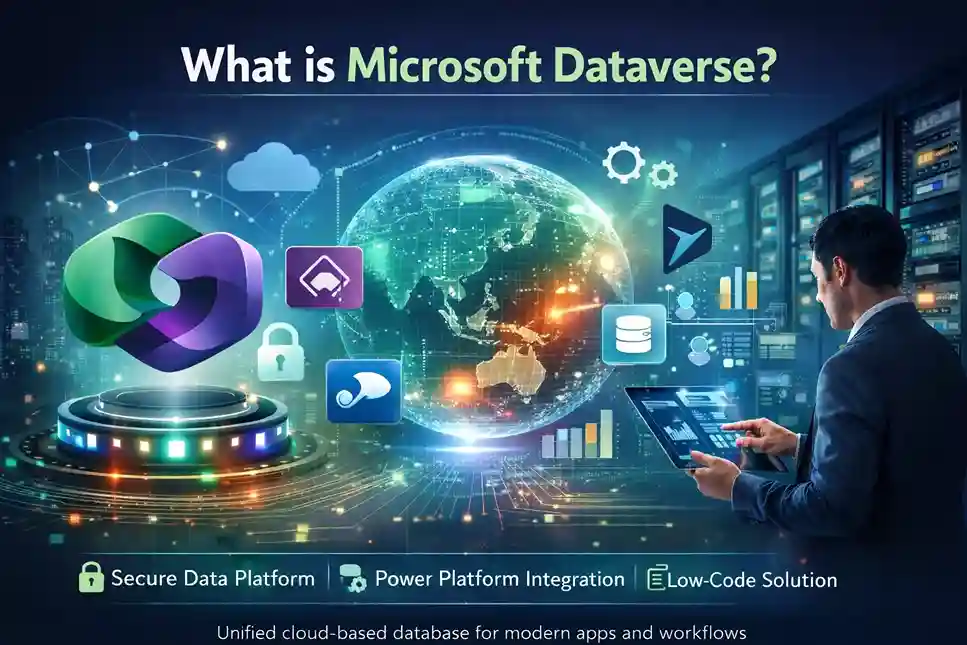
Microsoft Dataverse functions as a protected cloud-hosted information repository inside Microsoft's Power ecosystem, enabling companies to collect, control, and connect operational information throughout various software systems. The technology delivers integrated protection features, visual development tools requiring minimal coding, plus natural connections to Power Apps, Power Automate, Dynamics 365, and third-party solutions.
Formerly branded as Common Data Service, Dataverse acts as the central information backbone supporting modern business software creation, minus complicated database administration tasks. Companies leverage this foundation to design tailored operational tools while preserving high-level protection standards and regulatory adherence.
In contrast to conventional databases demanding deep programming knowledge, Dataverse supplies ready-made information frameworks, scheduled data preservation, and smart operational rules. This consolidated information system manages all aspects, ranging from basic client tracking to sophisticated interconnected data structures spanning international companies. Professional Dataverse implementation teams utilize these features to produce working systems 70% quicker compared to old-school database projects.
The technology ships with 400+ preconfigured operational components addressing typical requirements, including client tracking, revenue workflows, and accounting activities. Businesses add unique components matching their sector's specific demands. Integrated machine learning functions, process orchestration, and permission-based access controls position Dataverse as the go-to selection for companies pursuing accelerated modernization while keeping strict oversight and growth potential intact.
Dataverse revolutionizes organizational information management. Conventional databases just store information—Dataverse actually makes sense of what it all means.
Think about customer data. Regular databases only see tables and entries. Dataverse identifies connections, trends, and opportunities. Each client links to purchases, service requests, and contact settings. Updates flow naturally across linked applications, no programming required.
A major retailer discovered this firsthand. Their SQL-driven infrastructure isolated each outlet, producing stock management failures and service inconsistencies. Following their shift to Dataverse-powered systems, stock levels synchronized instantly company-wide. Shopper preferences are reflected immediately at every branch.
Power Platform connectivity multiplied positive outcomes. Regional supervisors created stock tracking applications independently. Programmed sequences managed inter-store movements. Live analytics boards eliminated stale spreadsheets. All components functioned together using Dataverse as the smart backbone, removing friction between previously disconnected tools.
Organizations discover game-changing improvements once Dataverse replaces their disconnected systems.
The data chaos ends immediately. I worked with a manufacturing company where the warehouse showed 10,000 units of Product A, sales said 8,500, and finance insisted on 9,200. Three departments, three numbers, countless arguments. After Dataverse? One number. Everywhere. When the warehouse receives shipments, sales sees updated availability instantly. Finance runs accurate reports without calling twelve people first. The arguments stopped because the confusion disappeared.
Business users become solution builders overnight. Is the finance team tired of waiting for IT to automate expense approvals? They build it themselves using visual tools. Marketing needs a campaign tracker? Done in days, not quarters. This shift frees IT from endless development requests, letting them focus on security, governance, and strategic initiatives.
Compliance becomes automatic instead of traumatic. A healthcare client previously spent three months preparing for HIPAA audits. Post-Dataverse? Two days. Everything they needed—access logs, encryption certificates, permission matrices—was generated automatically. GDPR requests that took weeks are now complete in hours. The platform handles the painful compliance stuff so humans can handle human work.
Scaling becomes boring (in the best way). One retail client went from 50 stores to 500 in eighteen months. Their old system would've melted. Dataverse didn't even notice. No emergency meetings about database capacity. No frantic calls to add servers. No performance degradation as data grew. It just... worked. Boring for IT meant exciting for business growth.
Cost predictability makes CFOs genuinely happy. A logistics company eliminated 17 software licenses, 4 database administrators, and approximately $300K in annual maintenance contracts. Replaced it all with Dataverse at 40% of the cost. Better functionality, lower expense, predictable monthly billing. They reinvested savings into business growth instead of keeping old servers running.
Dataverse runs on Microsoft Azure infrastructure with enterprise-grade security. The platform uses 256-bit AES encryption, multi-factor authentication, and continuous threat monitoring. A fintech startup using Dataverse grew from handling thousands of transactions to processing millions daily. No infrastructure overhaul needed—the platform scaled automatically as their business exploded.
Native integration eliminates connection headaches. Power Apps reads Dataverse data instantly. Dynamics 365 shares information seamlessly. Excel refreshes live data with one click. Standard connectors replace custom code that consultants charge fortunes to build and maintain. APIs stay stable through updates, protecting your investment from breaking changes that plague custom integrations.
Security gets seriously granular. Want the sales team to see customer names but not credit limits? Done. Need managers to edit records while others only view? Simple checkbox. Finance can access payment data while marketing sees only demographics. Every byte of data is automatically encrypted, whether sitting in storage or flying between servers. HIPAA, GDPR, SOX compliance? Check, check, check.
Automation capabilities change the entire workflow game. Power Automate workflows live inside Dataverse natively. Is that approval process requiring five signatures? Build it visually in an afternoon. Customer onboarding touching six departments? Automate the handoffs. No coding, no developers needed, just drag-and-drop logic that actually works. One client reduced their invoice processing from three days to three hours just by automating the approval chain.
The development of democracy changes everything. Professional developers still write complex plugins when needed, sure. But Karen from accounting can build her expense tracking app without begging IT for help. The platform provides guardrails preventing security disasters while letting business experts solve business problems. IT governs instead of gatekeeping. Everyone moves faster.
Every industry finds its own way to squeeze value from Dataverse, but some patterns show up repeatedly.
Manufacturing companies finally escape ERP prison. You know the situation—SAP runs the warehouse, Salesforce handles customers, and some ancient system tracks production. Nobody gets the full picture. With Dataverse as the central hub, plant managers see customer orders alongside inventory levels and production capacity. Real-time. One dashboard. No more Excel gymnastics trying to merge reports from three systems.
The CRM and ERP disconnect kills productivity in every company I've seen. Sales puts orders in CRM. Finance creates invoices in ERP. Nobody knows if the numbers match. One distributor had three people spending every Friday just making sure customer orders matched invoices. After implementing Dataverse, orders entered in CRM automatically create invoices in ERP. When payments arrive, both systems update simultaneously. Those three people now analyze profit margins instead of hunting mismatches. We make this integration even tighter with our Dynamics 365 expertise.
Insurance companies discovered something beautiful—claims that took three weeks now close in three days. Not through some miracle, but simple automation. Claim comes in, Dataverse routes it based on type and amount. Adjusters get notified automatically. Documents attach themselves to the right case. Approvals happen in sequence without anyone chasing signatures. The same adjusters handle 3x more claims because they're investigating, not pushing paper.
Retail gets really interesting. One clothing chain tracks every customer interaction—online browsing, in-store purchases, support calls, and social media comments. All flowing into Dataverse. When someone calls support, the agent sees their entire history. Bought those shoes online last month? Returned a jacket in Dallas? Posted about slow shipping? It's all there. Personalized service without creepy surveillance—just good data management.
Professional services firms live and die by billable hours, yet most track time in spreadsheets. Tragic. A law firm moved its timekeeping to Dataverse. Lawyers enter time on their phones. Rates are calculated automatically. Invoices are generated monthly without anyone touching them. Partners see utilization in real-time instead of waiting for month-end reports. Billable hours increased 12% just from better capture.
Microsoft didn't just slap a new name on Common Data Service and call it a day. The shift to Dataverse fixed real problems that were driving developers insane.
Common Data Service worked fine if you kept things simple. Basic customer records? Sure. Simple workflows? No problem. But the moment you tried anything ambitious, you hit walls everywhere. Want to connect that 20-year-old Oracle database without migrating everything? Good luck. Need to handle more than a million records without performance tanking? Hope you enjoy optimization projects. Machine learning integration? Write custom code and pray it works.
Dataverse changed the game completely. Virtual entities mean that the ancient Oracle database stays put while users access its data as it lives in Dataverse. No migration headaches, no synchronization nightmares, just real-time access to legacy data through modern interfaces. One pharmaceutical company connected its 1980s drug trial system this way. Scientists got modern apps while IT avoided a $5 million migration.
The scaling improvements blow my mind. An insurance provider I worked with struggled constantly with Common Data Service. Every new product meant database redesigns.
Performance degraded as policies accumulated. Adding AI features required months of custom development. They upgraded to Dataverse, and everything changed. New insurance products will now launch in three weeks instead of three months. The built-in AI Builder spotted fraudulent claims patterns that their old system missed completely. Same team, same budget, 10x the output.
The right Dataverse customizations make companies unstoppable. The wrong ones create expensive messes. We've learned which approaches actually work after building hundreds of these systems.
Entity architecture matters more than most people realize. A logistics client needed to track refrigerated containers—not just location, but temperature readings, GPS coordinates, customs paperwork, the works. Regular shipping entities in Dataverse couldn't cut it. So we designed custom container entities built specifically for their cold chain requirements. Their system now beats dedicated logistics software costing ten times more, and Microsoft updates don't break anything because we followed platform guidelines.
Now their dispatchers track temperature-sensitive pharma shipments better than companies using $500K logistics platforms. The kicker? When Microsoft updates Dataverse, its customizations keep working because we followed platform patterns instead of hacking around them.
Business rules without touching code? Sounds impossible until you see it live. A pharmaceutical distributor came to us with a nightmare scenario—FDA regulations changing every few months, each change requiring expensive developers to update their system. We flipped the script. Built visual rules that their compliance team could actually read and modify. Simple logic like "Schedule II drugs over 100 units need DEA approval" is configured through dropdowns and checkboxes. When the FDA announces new requirements, its compliance officer logs in, updates the rules, and clicks save. Done. No developer tickets sitting in the queue for weeks. No weekend deployments. No holding their breath, hoping nothing breaks.
Real-time analytics transformed how an equipment rental company operates. Previously, utilization rates were calculated overnight. Managers made decisions on yesterday's data. We implemented calculated fields that update instantly as equipment moves. Rental returns at 2 PM? Utilization metrics update at 2:01 PM. Managers see which equipment sits idle, which runs constantly, and which needs maintenance. One client increased revenue 18% just by relocating underutilized equipment to busy locations faster.
My favorite automation story involves an accounting firm drowning in invoice approvals. Partner signs off, then senior manager, then finance, then CEO for big ones. Email chains everywhere. Documents are lost constantly. We built the entire flow in Power Automate connected to Dataverse. Invoice arrives, workflow starts. The right people get notified in order. Automatic escalation after 48 hours. Exception handling for urgent payments. What took two weeks now finishes in two days. Zero custom code required.
Picking your Dataverse partner matters more than picking the technology itself. Get this wrong, and even perfect technology won't save your project.
Technical expertise shows in the details. Microsoft partners advertising 200+ services know a little about everything and a lot about nothing. Watch for warning signs: they quote Microsoft's website verbatim, they dodge specific implementation questions, they've never hit a Dataverse limit or worked around one. Real experts show you actual client wins—cut inventory costs 45%, sped up monthly reporting from 8 hours to 30 minutes, consolidated 50 databases into one. Specific numbers from specific projects, not marketing fluff.
Their approach tells you everything. Run from consultants who start drawing technical diagrams before asking about your business. I've seen too many projects fail because someone built a technically perfect solution for the wrong problem. Good partners dig into your actual workflows first. They want to know why Joan in accounting spends Fridays reconciling data. They map your real processes before mentioning technology. Business needs drive technical design, never the reverse.
Pricing structure reveals competence. Hourly billing without limits means they have no idea what they're building. These projects always—always—run over budget and past deadline. Experienced providers quote fixed phases with defined deliverables. Phase 1: migrate customer data, test integrations, and train power users. $75,000, 6 weeks. They know Dataverse well enough to estimate accurately and stand behind their numbers.
Experience speaks through stories, not claims. "Extensive Dataverse experience" means nothing. Real providers tell you about migrating that 2-billion-row SQL Server database, integrating SAP without disrupting operations, or connecting those AS400 systems everyone said couldn't be touched. They explain problems encountered and how they solved them. Vague generalizations mean no real experience.
Support philosophy separates vendors from partners. Project vendors cash your check and vanish. Real partners stick around because Dataverse evolves constantly. Microsoft releases updates, your business changes, and new features emerge. Quality providers offer ongoing optimization, refresher training when staff turn over, and strategic advice as you grow. They treat your success as their success, not just another completed project.
Custom development looks cheaper until you do the real math.
Year one: $800K to $2M, just getting started. Database design, development team, and infrastructure setup. Then comes the fun part—$200K to $400K every single year, keeping it running. Security patches, integration fixes, performance issues, backup systems, disaster recovery. Add it up over five years: $2.5M to $4.5M minimum.
Dataverse flips the economics completely. Implementation runs $250K to $700K total. Annual costs stay under $150K for optimization and updates. Five years? $500K to $1.5M all in. That's not marketing math—that's real client numbers.
Proof? A distribution company burned $3.1M over six years, maintaining its custom warehouse system. Constant bugs, integration nightmares, performance bottlenecks. We rebuilt everything in Dataverse for $420K. Better features, faster performance, happier users. The CFO couldn't believe the invoices were so small. This cost advantage multiplies when combined with our Power Platform development services across the Microsoft ecosystem.
Integration stops being painful once you understand Dataverse's connection philosophy.
Microsoft's own products connect natively. Office 365, Dynamics 365, Azure services—they're all part of the same Microsoft family. They share data like siblings share toys, instantly and without drama. Change a customer's address in Dynamics? Excel spreadsheets reflect it before you close the window. Drop a contract into SharePoint? Dataverse knows about it immediately. No waiting, no syncing, no "refresh and pray." Everything just flows.
Hybrid architectures work brilliantly. That defense contractor is keeping classified data in their bunker while using cloud analytics? Virtual entities make it seamless. Users see unified data whether it sits on-premise or in Azure. No actual data movement means security teams stay happy. Modern functionality without modernization risks.
Even competing platforms play nice. A medical device company runs Salesforce for sales, Dataverse for operations. Should be a disaster, right? Nope. Bidirectional sync keeps both systems current. The sales team keeps its familiar interface, and operations get Power Platform benefits. No political battles over "which system wins."
Legacy systems get new life through virtual entities. Is that insurance company running COBOL since 1982? Their mainframe data appears in Dataverse as if it were born there. Modern apps access ancient data without touching legacy code. When they're ready to migrate, great. Until then, everything works. Our Microsoft cloud consulting team handles these complex scenarios daily.
AD Infosystem lives and breathes Dataverse, period. We got our certifications the hard way—fixing disasters at 2 AM before morning launches, not from reading Microsoft docs.
Integration experience? We connected a COBOL system from 1978 to Dataverse last month. Still processing millions daily. That Oracle database your CFO won't let anyone touch? We made it talk to Dataverse. The Salesforce mess with ten years of random customizations? Sorted. Your "impossible" project probably looks like our typical Wednesday.
Every industry has quirks. Healthcare screams about HIPAA in every field. Manufacturers need inventory data accurate to the second across factories worldwide. Banks demand audit trails that make regulators happy. Retail wants data flying between stores and the web instantly. Been there, built that, learned the lessons.
We stick around after go-live because abandoned systems die fast. Real training, documentation people actually read, and monthly check-ins to catch problems early.
Numbers don't lie: clients cut costs 45%, performance triples, and get their money back in 12-18 months. One manufacturer saved enough to automate their entire warehouse.
Our pricing? Simple. Phase 1 costs this much, delivers that, and is done by this date. No meter running, no surprises.
Forget the sales pitch—let me show you what actually happened to real companies.
That transportation company is bleeding $2.1M every year just keeping their systems talking to each other? Gone. Wiped out. They took those integration costs to zero and used Dataverse to build a customer tracking portal their competitors would kill for. Started charging clients for premium tracking features. Paid for the entire project in 11 months flat. The CFO bought the IT director a very nice bottle of scotch.
A retail pharmacy chain was drowning. Prescription processing took forever, customers waited in long lines, and pharmacists worked overtime just to stay afloat. After Dataverse? Scripts fly through 65% faster. The time savings translated to $3.7M in additional prescriptions filled annually. Customer satisfaction jumped 40% because nobody likes waiting for medicine. Pharmacists actually leave on time now.
My favorite transformation happened at a manufacturing company hemorrhaging money through excess inventory. They carried $4.2M extra "just in case" because they couldn't see what other warehouses had. Dataverse gave them instant visibility across all locations. Stockouts disappeared. Carrying costs plummeted. They entered two new markets because finally they could promise delivery and mean it.
We've learned the hard way that winging it doesn't work. So we follow a proven playbook that actually delivers.
First 4-6 weeks, we dig into your mess. And it's always a mess—if it wasn't, you wouldn't need us. We map every system, document every process, and find every place data hides. More importantly, we calculate what fixing this saves you. Real dollars, not consultant fuzzy math. We also tell you honestly what might go wrong because surprises suck.
Next 6-8 weeks focus on the foundation. Think of it like building a house—get the foundation wrong and everything else crumbles. We set up your Dataverse environments properly. Security gets locked down tight. Core data structures get built right the first time. Integration frameworks go in before we move any data. Boring? Yes. Critical? Absolutely.
Migration takes 8-12 weeks and always surprises people. "Just move the data over," they say. Sure, if you want garbage. We clean years of accumulated crud first. Duplicates, orphaned records, that the customer entered six different ways. Then we move it systematically, verify everything, connect your other systems, and build the automation that makes it sing. Users start seeing the new system during this phase.
The final 4-6 weeks make the difference between adoption and abandonment. We tune everything for speed. Add the clever features that make users smile. Train people in their actual jobs, not generic "click here" nonsense. Write documentation someone might actually read. By the end, your team runs the system confidently.
After go-live, we stick around. Systems need care and feeding. Microsoft releases updates. Your business changes. New opportunities emerge. We check in monthly, fix small issues before they become big ones, and keep your Dataverse investment delivering value year after year.
Microsoft Dataverse development services fix the mess of data living in fifty different places. Companies run dozens of databases, countless Excel files, and old systems that never learned to talk to each other. Dataverse brings order to this chaos. Reports that ate up three days? Done in minutes. Fresh data replaces stale numbers from last week.
Dataverse didn't just rebrand from Common Data Service. Virtual entities mean your 1990s mainframe plays nice without expensive rewrites. The platform handles massive databases without breaking a sweat. Built-in AI features work today, not someday, maybe.
Money matters most. Custom platforms burn through $2.5M to $4.5M over five years—development, maintenance, fixes, repeat. Dataverse costs $500K to $1.5M total and performs better. Finding the right partner makes the difference. Bad ones blow budgets on fancy technical tricks. Good ones fix business problems.
Everything connects properly. Microsoft products speak the same language instantly. Keep sensitive data locked down while using cloud tools. Even Salesforce shakes hands with Dataverse peacefully. Security controls every field individually. Compliance reports generate automatically—no ruined weekends.
Real client numbers: typing work drops 60-80%. Reports run 90% faster. People accomplish 35-45% more when technology cooperates. Integration costs disappear. Companies launch new products that their old systems couldn't support. Six to nine months gets you operational. Actual results from actual companies facing the same nightmare you probably recognize.