
Running a global business shouldn't feel like herding cats, but for most companies, that's exactly what it's like. NetSuite OneWorld implementation is basically your ticket to sanity. It's a cloud platform that lets you run all your international offices, deal with dozens of currencies, stay on the right side of tax authorities everywhere, and actually see what's happening with your money—all from one dashboard. No more duct-taping systems together or playing email tag to get basic financial data.
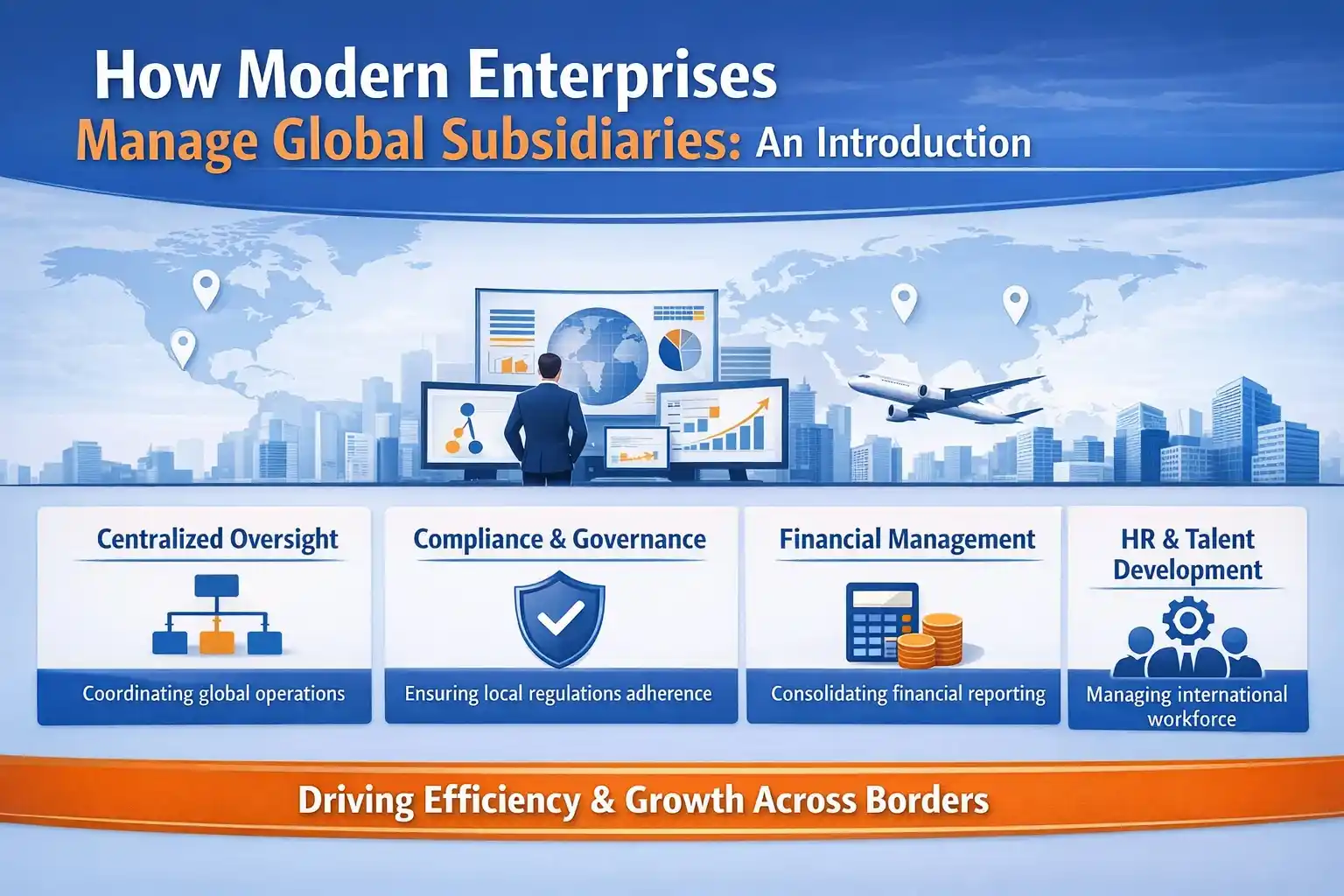
Ever watch a multinational company try to close its books? It's like watching a slow-motion train wreck. The Mumbai office sends its numbers in rupees using Indian accounting standards. Sydney delivers theirs a week late because they're on a different fiscal calendar. The Brazilian team? They're dealing with tax complexities that would make your head spin, all tracked in a system held together with duct tape and hope.
The CEO asks a simple question: "What's our global cash position?" Three weeks later, after countless spreadsheets have been beaten into submission, they get an answer that's already obsolete. Meanwhile, critical decisions get delayed, opportunities evaporate, and everyone pretends this is just how global business works.
It's absolute madness. Companies are burning millions on manual processes that add zero value. Smart people are wasting their talents on data entry instead of analysis. Modern businesses are operating like it's 1995 because their technology infrastructure can't handle 2026 reality.
NetSuite OneWorld changes this entire equation. It doesn't force everyone into a rigid box—Mumbai still handles GST its way, and Sydney keeps their processes. But now it all connects seamlessly, automatically, intelligently.
NetSuite OneWorld implementation is like renovating an old building into modern offices. It's not about demolition—it's about creating spaces that work for each team while ensuring everyone can collaborate. The process involves mapping out how each subsidiary operates, identifying what needs to stay local versus what should be standardized, and then configuring the platform to match those real-world needs. Every business has its quirks, and implementation means making sure the system handles them gracefully.
Okay, so what exactly is this thing? NetSuite OneWorld is basically the Swiss Army knife of international business software. It lives in the cloud (so no servers to babysit), and it's built from the ground up for companies that operate in multiple countries.
The thing about most business software is that it's designed for companies that stay in one place. Then vendors try to tack on "international features" like they're adding a spoiler to a minivan. Doesn't really work. OneWorld's different. The folks who built it started by asking, "What if a company needs to run operations in 15 countries from day one?"
So each office gets to keep doing things their way. Your Japanese subsidiary follows Japanese accounting rules. Your Brazilian team handles their taxes their way. But—and this is the cool part—everything automatically flows up to give you the big picture whenever you need it. We're talking support for pretty much every currency you've heard of (and plenty you haven't), business operations in tons of languages, and tax know-how for over 100 countries. But honestly? The best part is that it just works, without making everyone march to the same drummer.
NetSuite OneWorld handles the messy reality of running multiple companies around the world. Each subsidiary maintains its own accounting records—so your German office tracks VAT their way while your Japanese team handles consumption tax theirs—but all the data rolls up into consolidated reports whenever you need them. No more spending entire weekends manually combining spreadsheets from 15 different countries. The system manages over 190 currencies, updating exchange rates and converting amounts automatically (and accurately, which matters when you're dealing with millions). Built-in tax engines handle the specific requirements for each country—VAT in Europe, GST in Australia, state taxes in the US—without requiring a tax expert in every office. When subsidiaries do business with each other, the platform records both sides of the transaction and handles the eliminations for you. And executives get dashboards that show what's actually happening across the business right now, not what happened last month.
Companies running on NetSuite OneWorld discover what it's like when technology actually works FOR them. All those disconnected subsidiaries suddenly start singing from the same hymn sheet, while still maintaining their local flavor. Financial consolidation that used to eat up entire weeks? Done in minutes. Executives stop flying blind and start seeing exactly what's happening across their global empire, right now, not three weeks ago. Tax compliance transforms from a recurring nightmare into background noise—the system stays current with changing regulations, so finance teams don't have to. Growing internationally no longer means exponentially growing complexity. Adding that new subsidiary in Brazil or expanding into Southeast Asia becomes a configuration change, not a technology crisis.
Old-school ERP systems weren't built for the real world of international business. They assume everyone sits in the same building, uses the same currency, and follows the same rules. Try to stretch them across continents and watch the wheels fall off.
Research shows that over 70% of big companies are ditching these dinosaurs for cloud platforms. Why? Because patching together local systems with spreadsheets and hope isn't a strategy—it's a disaster waiting to happen.
Picture a month-end close at a typical multinational: Singapore finishes its books and exports a CSV file. Someone in London manually converts currencies (hopefully using the right rates). The Chicago team emails their numbers. Three weeks later, after countless emails and conference calls, management gets a "consolidated" report that's already ancient history.
Today's business world doesn't pause for manual consolidation. Stock markets react in milliseconds. Competitors launch products overnight. Regulators change rules without warning. Companies still running fragmented systems are bringing knives to a gunfight. Real-time data isn't a luxury anymore—it's table stakes for staying competitive.
And compliance? Every country has its own special blend of tax torture. Brazil's tax code could fill a library. India's GST has more rates than a hotel. Managing this maze through separate systems guarantees that something, somewhere, will go wrong.
Red flags start popping up everywhere when companies outgrow their current setup. If getting a simple answer about last month's global revenue involves three conference calls and a week of spreadsheet archaeology, that's problem number one. Currency confusion creating million-dollar "rounding errors"? That's another warning sign. Are finance teams spending more time reconciling than analyzing? Major red flag. Each new country or subsidiary is making things exponentially harder instead of just incrementally complex? Time for a change.
The real tell is when growth starts feeling like punishment. Opening a new office should be exciting, not terrifying. Acquiring a company should expand capabilities, not create integration nightmares. When basic questions like "What did we sell in Europe last quarter?" require forensic accounting, the current system has hit its expiration date. These aren't just inconveniences—they're competitive disadvantages that compound daily.
Traditional ERP software hits a wall when companies go international. These systems were built for simpler times—one office, one country, one set of rules. Try running subsidiaries in five countries with them and watch the chaos unfold. Finance teams end up building elaborate workarounds that get more fragile with each new location. Monthly closes become marathons of copying data between systems, manually converting currencies, and praying nothing breaks. Compliance turns into a game of catch-up because these platforms don't understand that tax laws in Brazil work nothing like those in Belgium. Most companies give up and just run different software in each country, creating isolated islands of information.
NetSuite OneWorld flips the script entirely. From day one, the architects assumed companies would operate everywhere. Multiple entities aren't an edge case—they're the whole point. Financial data from all subsidiaries flows together automatically, so what used to take three weeks now happens instantly. The platform stays on top of changing tax laws and compliance requirements globally, catching problems before auditors do. Every subsidiary works in the same environment but is configured for its specific needs. Companies making the switch typically see results immediately—faster closes, fewer errors, better visibility.
OneWorld recognizes that subsidiaries need breathing room to operate effectively, while the headquarters needs control and visibility. Each entity maintains its own accounting structure—different charts of accounts, closing schedules, whatever makes sense locally. But master data like customer records and product information stays consistent across the organization.
When month-end arrives, there's no frantic scrambling for reports. Consolidated financials are generated on demand, whether looking at one subsidiary, a region, or the entire company. Executives can drill into the details themselves without flooding the finance team with requests for explanations.
NetSuite handles currency complexity that would break most accounting teams. Transactions automatically record in both the local currency and whatever reporting currency makes sense. Exchange rates update based on whatever schedule works—daily, weekly, or locked for specific periods. The math for currency gains and losses? Handled automatically for each entity.
Complex situations don't break the system either. Triangulated currencies, forward contracts, period-end revaluations—it all works. Historical exchange rates are preserved for accurate reporting, no matter how much currencies fluctuate. Manual currency calculations disappear, along with the errors they inevitably create.
Getting tax right in one country is hard enough. Multiply that by 20 countries, and it becomes impossible without the right tools. OneWorld comes loaded with tax engines for major markets, calculating VAT, GST, sales tax, and dozens of other levies automatically. When tax rates change (and they always do), the system updates itself.
The platform goes beyond just calculating taxes. It generates the actual filings each country requires in its specific format. European EC sales lists, Australian BAS returns, US state tax forms—all produced correctly without manual intervention.
Companies with multiple subsidiaries do business with themselves constantly. Subsidiary A sells inventory to Subsidiary B. Headquarters charges management fees. Shared services get allocated. In disconnected systems, recording these transactions correctly on both sides becomes a reconciliation nightmare.
OneWorld eliminates that pain. Intercompany transactions post to both entities simultaneously with proper eliminations for consolidation. Transfer pricing rules stay consistent. Intercompany balances always match. Clean audit trails document everything. What used to consume days at month-end now takes minutes.
Information loses value fast. Last month's numbers might as well be last year's when markets shift daily. OneWorld puts the right information in front of the right people, period. A country manager in Germany doesn't need to wade through data from 50 other countries—they get their region's performance front and center. Meanwhile, the CFO can check global cash positions while having morning coffee, and the CEO sees big-picture metrics without getting lost in the weeds.
The analytics aren't just pretty charts either. The system actually finds stuff humans miss. Maybe sales in Southeast Asia started trending down three weeks ago, but it's subtle. The platform flags it before it becomes a crisis. Want to know what happens if exchange rates shift 10%? Run a scenario. Need a board report that doesn't look like every other boring spreadsheet? Build it once, use it forever.
Running a global business means juggling accounting standards like a circus performer. NetSuite OneWorld doesn't make you choose—it handles US GAAP for your American investors, IFRS for European stakeholders, and whatever specific rules each country has invented to make accounting more complicated.
The compliance toolkit covers:
When Brazil decides to change its tax code (again), or India updates GST rates (again), the updates roll out automatically. No more finding out about regulatory changes from angry letters from tax authorities.
NetSuite OneWorld works for pretty much any company brave enough to do business globally:
Each industry has its own headaches, but they all share one need: knowing what's actually happening in their business without waiting three weeks for an Excel file to make its way up the chain of command.
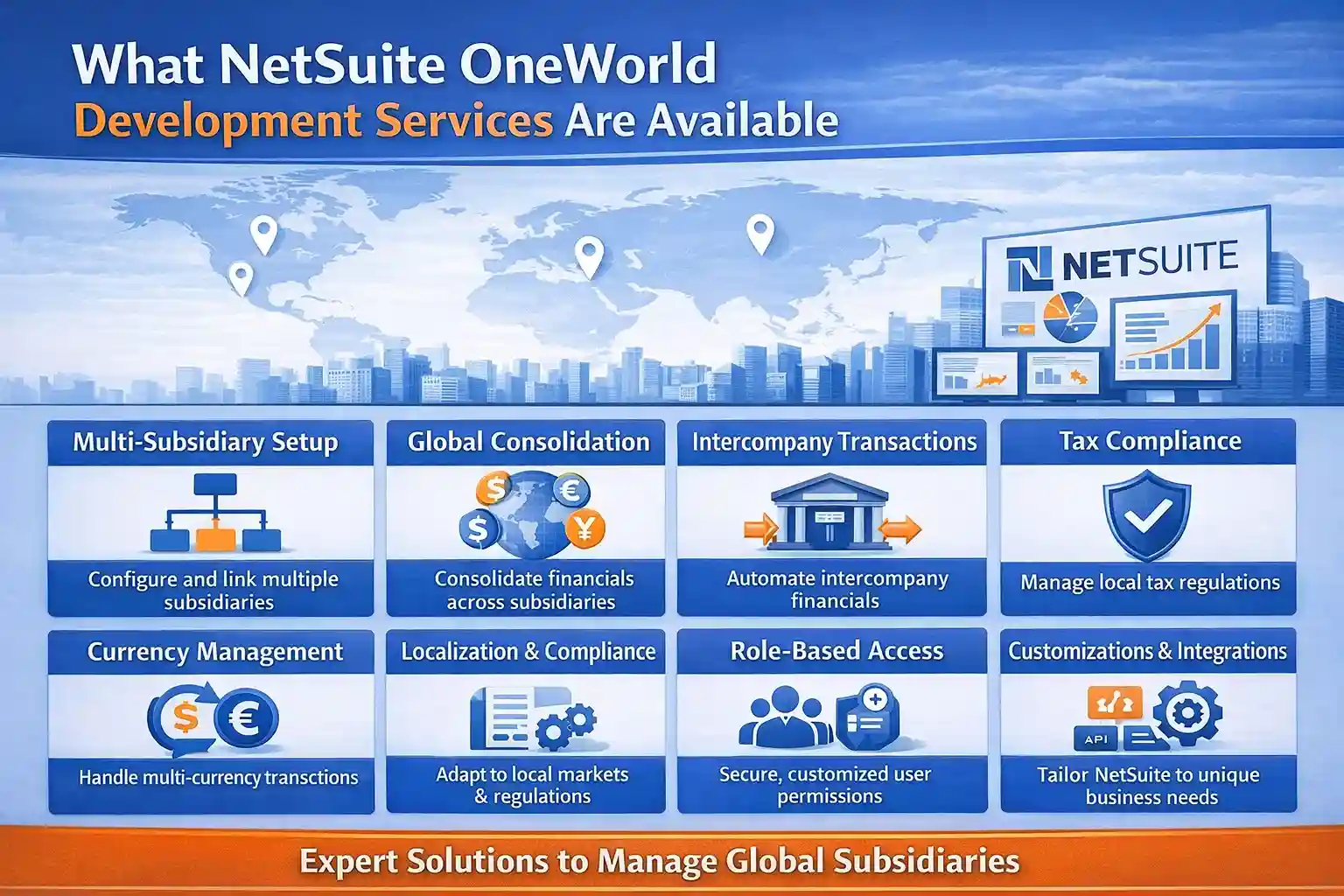
Listen, NetSuite OneWorld out of the box is fine if you want to run your business like everyone else. But last I checked, nobody got ahead by being average. Development services are where things get interesting—where you stop adapting to software and make software adapt to you. It's the difference between wearing an off-the-rack suit and getting one tailored. Sure, both cover your body, but only one makes you look good in the boardroom.
I've seen companies try to shoehorn their approval processes into standard workflows. It's painful. Like watching someone try to parallel park a semi-truck in a compact space. Your Tokyo office has had this complex approval matrix developed for over 20 years. Your startup acquisition in Berlin? They make decisions over Slack. Standard software says pick one. Reality says that's nonsense.
AD Infosystem developers get it. They build workflows that actually work. Purchase order from Japan? Routes through the proper six levels of approval (because that's how Japan rolls). Same PO from Berlin? Two approvals and done. The system's smart enough to know the difference. No more emails stuck in approval limbo while deals die on the vine.
SuiteScript is NetSuite's secret sauce—its coding language that makes impossible things possible. You know that calculation your CFO does on a napkin that somehow determines profitability? The one involving moon phases and commodity prices? (I'm kidding, but barely.) SuiteScript makes NetSuite do that math automatically.
I worked with a logistics company that calculated driver commissions using a formula so complex that they had one guy who understood it. When he announced his retirement, they panicked. We coded his brain into SuiteScript. Now the system handles what used to take him three days every month. He's fishing in Florida, and payroll runs perfectly.
Board meetings shouldn't feel like an undergraduate accounting class. But that's what happens when you dump standard reports on the table. Custom development fixes this mess. We're talking reports that tell stories, not just vomit numbers.
One client's CEO was a visual guy. Hated spreadsheets. We built him a dashboard showing global operations as an actual map—green countries making money, red ones bleeding cash, yellow ones trending wrong. He could spot problems in seconds instead of hunting through pivot tables. The CFO got detailed drill-downs. The board got clean summaries. Everybody won.
Here's the thing about enterprise software—it's like a dysfunctional family reunion. Everyone needs to talk, but nobody speaks the same language. NetSuite might be your responsible older sibling, but you've still got crazy cousin Salesforce and weird uncle SAP to deal with.
The CRM situation: Sales lives in Salesforce. They'll die there. Accept it. But when deals close, that data better show up in NetSuite immediately, not "when Kevin from sales remembers to update both systems." Integration makes it automatic. Deal closes, order creates itself, inventory allocates, commission calculates. Kevin can focus on selling instead of data entry.
E-commerce chaos: You're selling on your website, Amazon, eBay, and three regional platforms nobody's heard of. Each has its own order format, its own inventory sync, its own special quirks. Good integration makes this mess invisible. Orders flow in, inventory updates everywhere, and you don't wake up having oversold something by 500 units.
Banking nightmares: Remember matching bank transactions manually? Me neither, because I've blocked out the trauma. Modern integration pulls bank data automatically, matches it to invoices, and only bugs you about the weird stuff. Your cash position stays current without someone spending Fridays playing "find the payment."
The weird stuff: Every business has that one system nobody else uses. Maybe it's industry-specific software from 1987. Maybe it's a custom app someone's nephew built. Doesn't matter. If it has data you need, we make it talk to NetSuite.
What most companies end up connecting:
AD Infosystem has connected NetSuite to systems I didn't know existed. Agricultural monitoring platforms. Casino management software. A custom app for tracking racing pigeons. (I'm not making that up.) The point is, if it has data, we can probably integrate it. And more importantly, we make sure it doesn't break when you need it most.
Global operations are messy. Anyone who says otherwise is selling something. Your subsidiaries aren't clones—they're unique entities shaped by local markets, regulations, and business culture. Customization acknowledges this reality instead of fighting it.
Take approval workflows. In Germany, everything needs documentation in triplicate. In startup-heavy markets, they approve million-dollar deals over WhatsApp. Neither is wrong—they're just different. Smart customization handles both without making either side compromise.
Local data requirements are their own special hell. Brazil wants tax numbers that look like nuclear launch codes. The Middle East needs documents in Arabic and English. Some Asian markets require chops (official stamps) on everything. Standard fields can't handle this variety. Custom ones can, and they only show up where needed. The team in Sweden doesn't see Brazil's tax field circus.
I'll never forget this one client. They had offices in countries where, how do I put this... let's just say gift-giving to government officials was considered "normal business practice." The compliance team was losing sleep. We ended up building the most paranoid system I've ever seen. Every single payment got scrutinized like it was going to end up on the front page of the Wall Street Journal. Vendor names ran against sanctions lists. Payments to random "consultants" threw up red flags. Round numbers to government agencies? Instant alert to legal. The system was so locked down that someone joked they needed approval to buy coffee. But you know what? Two years later, when their competitor got hit with massive FCPA fines, our client was squeaky clean. Sometimes paranoid is good.
Performance measurement gets personal, too. Your factory in Vietnam cares about production efficiency and defect rates. Your sales office in Manhattan watches pipeline velocity and close rates. The shared services center in Dublin? They're all about ticket resolution and service levels. Custom dashboards mean everyone sees their numbers, not some generic scorecard that helps nobody.
Look, I've seen NetSuite implementations go sideways more times than I care to remember. The difference between success and disaster? It's not the software—it's the approach. First rule: map out your global architecture before anyone touches a keyboard. I watched a company try to "figure it out as we go," and they ended up rebuilding everything six months later. Expensive lesson.
Standardization is tricky. You want consistency across subsidiaries, but force too much uniformity and local teams revolt. Find the sweet spot—maybe everyone uses the same chart of accounts structure, but payment terms stay flexible. And for the love of all that's holy, automate those intercompany transactions from day one. I've seen grown accountants cry trying to reconcile manual entries between 20 subsidiaries.
Here's what nobody tells you: the best technical implementation means nothing if people hate using it. Invest in change management like your life depends on it. And pick developers who've actually run global businesses, not just coded for them. There's a massive difference.
Getting NetSuite OneWorld right isn't rocket science, but it's not a weekend project either. You need people who understand enterprise systems, international finance, and the million weird exceptions that pop up in global business.
Forget those generic requirement templates. AD Infosystem consultants actually dig into how your business runs. They'll sit with your teams in Singapore and Chicago, watch the month-end close, and understand why Tokyo does things differently from Toronto. It's detective work, really.
They map out everything—how invoices flow, who approves what, which reports everyone ignores versus the ones that actually matter. This isn't busy work. Every hour spent here saves ten hours of rework later.
Architecture is like the foundation of a house. Screw it up, and everything built on top eventually cracks. Get it right, and you can add floors without worry. The big decisions happen here—how to structure subsidiaries, design the chart of accounts, handle currencies, and manage taxes.
I've seen companies skip this phase to "save time." They always pay for it later. One client had to redo their entire subsidiary structure after acquiring a company because they didn't plan for growth. Cost them six months and a fortune in consultant fees.
This is where plans meet reality. AD Infosystem's team configures each subsidiary, sets up security (who can see what), builds out financial processes, and adds customizations. But here's the smart part—they do it in waves, getting feedback after each one.
No "big bang" surprises where you flip the switch and discover everything's wrong. You see it working, test it with real scenarios, adjust, repeat. By the time you go live, there are no mysteries.
Data migration is where implementations often go to die. Twenty years of transactions, customer records from five different systems, that Access database Bob in accounting built in 2003—it all needs to move over clean.
AD Infosystem has tools, but more importantly, they have battle scars. They know to check for duplicate customer records, orphaned transactions, and that weird data encoding issue that only shows up in the German subsidiary's records. They maintain parallel runs so business doesn't stop while data moves.
Testing isn't glamorous, but it's critical. Start with the basics—can users log in? Then test real scenarios. What happens during the month-end when everyone hits the system? How about year-end with all those accruals? Break it before go-live, not after.
Smart companies pilot with one subsidiary first. Pick one that's complex enough to surface issues but not so critical that problems cause catastrophe. Iron out kinks there, then roll out to others. This staged approach has saved countless implementations from disaster.
Training can't be an afterthought. Different roles need different training. The AP clerk doesn't need to know global consolidation. The CFO doesn't care about invoice entry shortcuts. Target training to what people actually do.
But here's the thing—implementation isn't done at go-live. It's just beginning. Monitor how people actually use the system. Where do they struggle? What workarounds are they creating? Six months in, you'll find optimization opportunities everywhere. The best implementations keep evolving.
NetSuite OneWorld's architecture—okay, this is where it gets interesting. Picture this: all your subsidiaries' data sitting in one massive database in the cloud. But here's the kicker—each subsidiary can't mess with anyone else's stuff. It's like having roommates who share a kitchen but have their own locked bedrooms.
I remember explaining this to a CFO who'd been burned by distributed systems. His face lit up when he realized what this meant:
The real magic? All that crap that used to break. Saturday night sync jobs are failing. Which system has the "truth" when numbers don't match? That panic when the Hong Kong server crashes during their month-end. Gone. It just... works. I know that sounds like marketing fluff, but after watching companies struggle with distributed ERP for decades, having everything in one place feels like cheating.
I'll tell you what nobody believes until they see it—OneWorld actually scales without the usual drama. Back in the day, every new subsidiary meant months of IT planning. Server specs, data center locations, network capacity—endless meetings about infrastructure that had nothing to do with running the business.
With OneWorld, adding subsidiary number 50 takes about as long as adding subsidiary number 5. I watched a client acquire three companies in six months. Each acquisition added maybe a week of configuration work. Same platform, same processes, just new entities. Their IT team was shocked that they weren't working weekends.
The cloud thing matters here. Not because "cloud is cool" but because you stop having stupid conversations about hardware. Revenue jumps from $100M to $1B? OneWorld doesn't care. Your processes might need tweaking, but the platform just handles it. I've seen companies outgrow every other system they own while OneWorld keeps humming along.
The kicker? Those customizations you built five years ago still work. That integration with your weird industry-specific software? Still running. Most platforms make you rebuild everything when you scale. OneWorld just scales with you.
Sure, certifications look nice on proposals, but I've seen certified consultants who couldn't configure their way out of a paper bag. What really counts? Battle scars. Find partners who've actually done this before—preferably in your industry. Someone who's implemented NetSuite for a bank won't necessarily understand manufacturing complexities.
Want to know the difference between pretenders and pros? Ask them to describe a project that went completely sideways. Real implementers will tell you about the time they discovered a client's entire inventory system was wrong two days before go-live. Or when a currency configuration error almost triggered a tax audit. If they say every project runs smoothly, run away. Fast.
Coding ability separates consultants from configurers. Can they build custom solutions when NetSuite's standard features hit a wall? I'm talking about writing elegant SuiteScript that handles your specific edge cases, not googling solutions and hoping they work. Your business has unique requirements—your partner had better know how to code them.
Integration capabilities? Non-negotiable. Every business runs a Frankenstein collection of software these days. Your NetSuite partner better know how to make it all play nice together. Ask specific questions: Have they integrated with your exact CRM version? Can they handle real-time data flows when transaction volumes spike?
Time zones matter more than you think. That partner who seemed great in demos? Not so great when Singapore has an urgent issue at 3 AM their time. Look for firms with true global coverage or at least solid partnerships in your key regions.
One last thing most people miss: cultural fit. Technical skills mean nothing if your Japanese subsidiary can't work with them because they bulldoze through conversations American-style. Or if they don't understand why certain reports need government stamps in Latin America. The best partners adapt their approach to each region while keeping the project moving forward.
Executives finally get what they've been asking for—instant answers. No more chasing regional controllers for last week's numbers. Everything's right there on their screen, updated to the minute. CEOs can check performance during their morning jog instead of waiting for quarterly briefings. That shift from historical reporting to live data fundamentally changes how companies operate.
Finance departments undergo a complete transformation. Remember those marathon Excel sessions combining 30 spreadsheets from different countries? Ancient history. The consolidation that consumed entire teams for a week now finishes before lunch. Those freed-up accountants? They're analyzing trends and building forecasts instead of fixing formula errors at midnight.
Compliance becomes proactive rather than painful. The system enforces rules before transactions post, not after auditors find problems. Regulatory reports generate themselves in the required formats. When auditors show up (and they always do), every transaction has a clear trail from initiation to approval to posting. One client told me their audit fees dropped 40% after implementation simply because auditors could find what they needed without archaeology expeditions.
Standardization happens naturally, not forcefully. Tokyo might process purchase orders differently from Toronto, based on local practices, but both follow core principles that ensure control and visibility. Quality stays consistent worldwide while regions maintain their operational preferences. It's standardization that makes sense, not standardization for its own sake.
The financial management toolkit goes way beyond bookkeeping basics. Predictive models show where things are heading before they arrive. Executives can test scenarios—what if we acquire that competitor? What if currencies shift dramatically? Dashboard alerts flag unusual patterns immediately. Small problems get solved before becoming quarterly earnings surprises.
Global business is getting more complex by the day, and ERP systems have to keep up. The old model of separate systems for each country? Dead. Companies need everything connected, automated, and accessible from anywhere. Cloud platforms like NetSuite OneWorld figured this out early—bringing all operations under one roof while still letting each location do its thing.
The next wave? ERP systems that think for themselves. Machine learning will start handling decisions that currently eat up hours of human time. Imagine systems that automatically adjust transfer pricing based on tax optimization, or flag unusual spending patterns before they become fraud cases. Predictive models will get increasingly accurate at forecasting cash flow, inventory needs, and market demand. Integration will extend to technologies we haven't even invented yet. Companies building on flexible cloud platforms now won't have to rip everything out when the next big innovation hits.
So here's the bottom line: You can keep fighting with disconnected systems, playing email ping-pong to get basic financial data, and watching competitors move faster than you. Or you can get everyone on the same page with NetSuite OneWorld.
The platform does what global companies actually need—it brings all your subsidiaries together without forcing everyone to work exactly the same way. Real-time consolidation means no more waiting three weeks to know last month's numbers. Local teams follow their own tax rules and processes while the headquarters sees everything clearly. The automation handles the tedious stuff while your people focus on growing the business.
International growth is complicated enough without fighting your own systems. NetSuite OneWorld takes the stuff that used to keep IT teams up at night—launching new entities, dealing with currency chaos, dodging compliance bullets—and makes it boring. That's a good thing. Set it up once, configure what you need, and done. Companies running on this platform stop wasting energy on operational headaches and actually leverage their worldwide presence. When your competitors are still consolidating last quarter's numbers, you're already making moves based on what happened yesterday. That's the difference between surviving and winning.