
Should you build a Progressive Web App or native app? It's the million-dollar question every business faces. At AD Infosystem, we get this question every single day from confused business owners. There's no cookie-cutter answer—what works for a startup won't work for a bank, and what's perfect for a blog might fail for a gaming app. I've watched too many companies burn through budgets building fancy native apps that nobody downloaded. I've also seen businesses handicap themselves with basic PWAs when they really needed the horsepower of native. After implementing 300+ mobile solutions, we've developed a clear framework for making this decision. This guide shares everything we've learned about choosing the right mobile strategy.
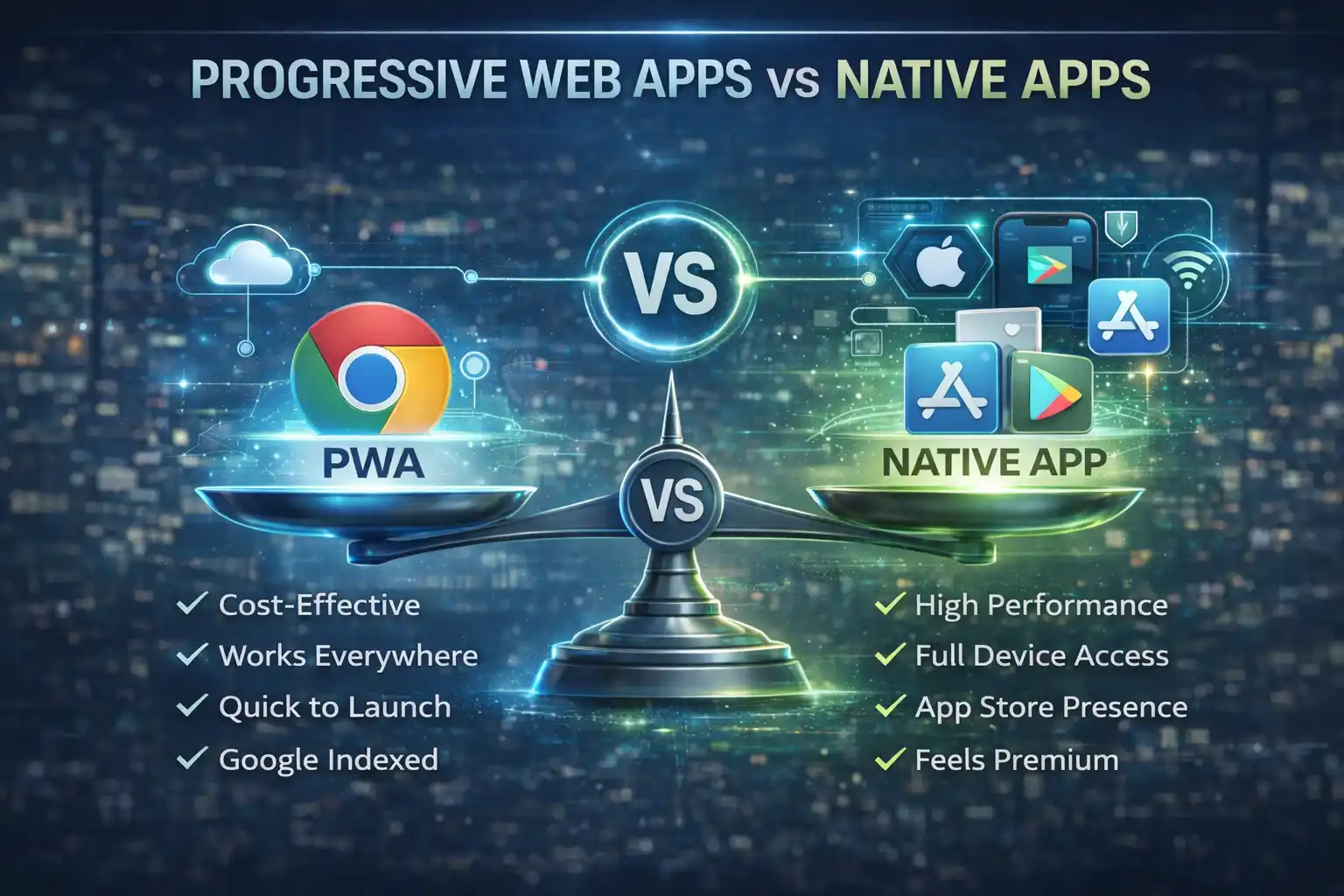
Progressive Web Apps are basically websites on steroids. They load through browsers like regular sites, but users can stick them on their home screens, use them offline, and get push notifications. No app store needed. This is why any modern web application development company now offers PWA services—you get app-like features without the app store hassle.
Twitter Lite shows what's possible. They cut data usage by 70% and got people viewing 65% more pages. Starbucks built a PWA that lets customers browse and order without internet—and it's 99.84% smaller than their iPhone app.
Progressive web app development makes sense for lots of reasons. You write code once and it works everywhere. No waiting for Apple's approval or paying Google's fees. When you fix bugs, everyone gets them instantly. Plus, Google can actually find and rank your content. The downside? You can't use every phone feature, and native apps still feel a bit snappier.
Native apps are the traditional downloads from app stores. Built specifically for iPhone or Android, they live on your phone and can use everything—camera, contacts, Bluetooth, whatever.
Look at banking apps. They scan your fingerprint, store data securely, and encrypt everything. Uber tracks you in real-time, processes payments, and syncs with your calendar. That deep integration is native's superpower.
Native app development services create the smoothest experience possible. Everything loads fast, works offline completely, and feels premium. Being in app stores builds trust. But you're basically building two separate apps, dealing with Apple and Google's rules, and users have to manually update. It's expensive and slow.
Real costs depend on what you're building.
Feature Complexity hits hardest. A simple app? Cheap. Real-time trading with payments? That's mortgage territory. Every feature multiplies development time, especially when building twice for iOS and Android.
Platform Coverage doubles everything for native. PWAs need one team. Native needs iOS developers, Android developers, double testing, double maintenance.
Third-Party Integrations hurt both options equally. Connecting Stripe or Salesforce takes time whether PWA or native.
Security & Compliance can explode budgets. Healthcare apps need HIPAA. Financial apps require encryption. These add 30–50% to costs.
Long-term Maintenance surprises everyone. Native apps break without maintenance. PWAs just need occasional browser tweaks— about 40% cheaper to maintain.
This cost comparison between progressive web apps and native apps typically shows PWAs costing 50-70% less over three years.
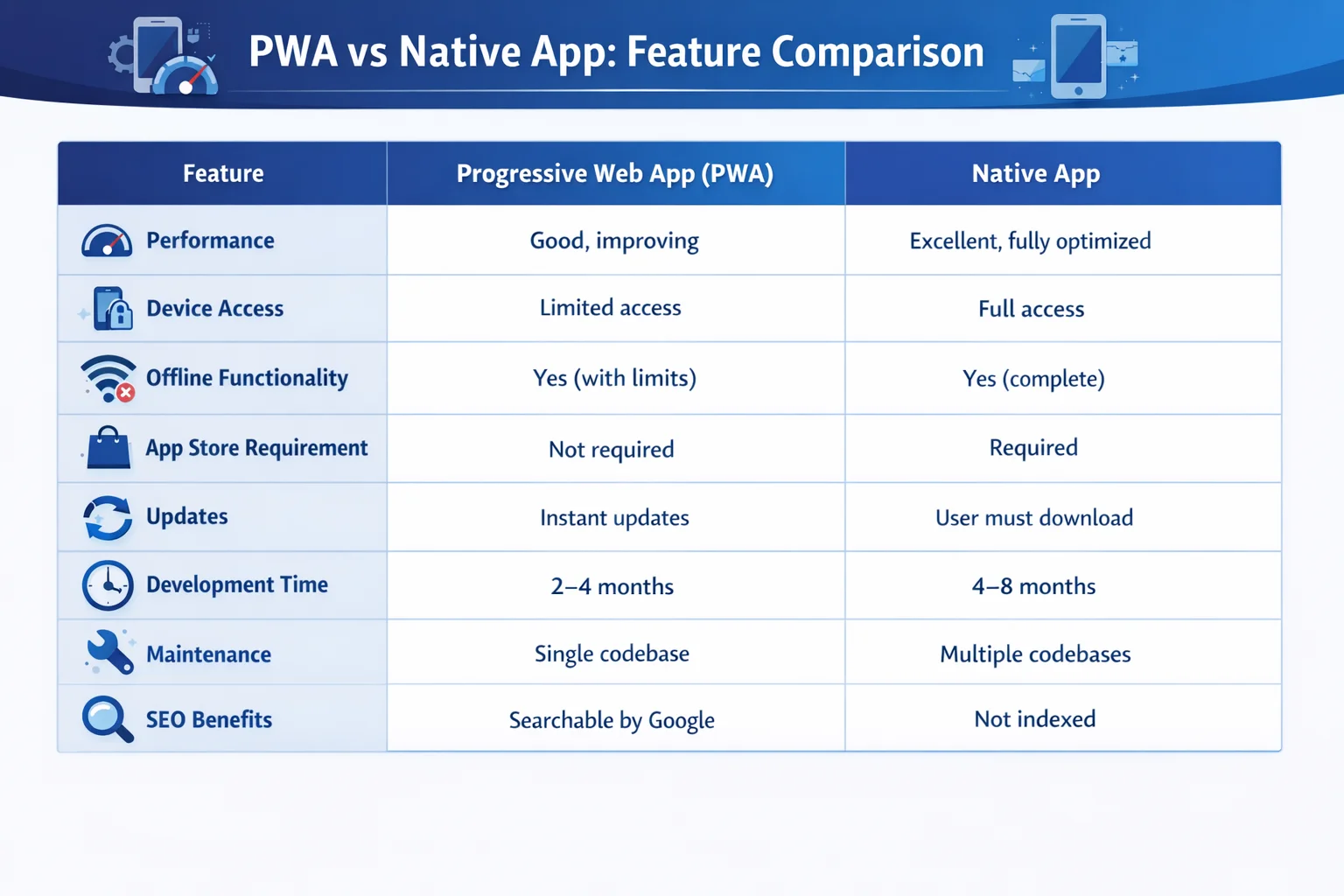
This mobile app vs web app comparison shows the real trade-offs.
Here's our proven decision framework:
Limited funds? PWAs give you 80% of native features for 40% of the price. Big budget? Native delivers premium.
Racing competitors? PWAs launch in weeks. Got months? Native lets you polish details.
Basic offline? PWAs work. Complex offline? You need native.
Camera and GPS work in both. Need Bluetooth or NFC? Native only.
Uncertain? Start PWA. Clear vision? Build native immediately.
Users hate downloads? PWA removes friction. Expect premium? Native delivers.
This framework makes progressive web apps vs native apps for small business decisions clearer.
E-commerce: Start with PWAs. Alibaba's PWA boosted conversions by 76%. Once you're making serious mobile revenue, add native. Amazon's app converts 3× better.
Financial Services: Native dominates. Security requirements demand native capabilities. Use PWAs for calculators, not core banking.
Media & Publishing: PWAs win. The Washington Post’s PWA increased engagement by 5×. Fast loading and offline reading without app stores.
B2B Services: PWAs work great. Nobody downloads apps just for dashboards. Go native only for complex offline needs.
Healthcare: A split decision. Patient portals work well as PWAs. Clinical and provider-facing apps require native.
Which is better PWA or native app for ecommerce? Start PWA, scale to native.
PWA Challenges: Apple doesn’t fully support PWAs. No iOS App Store presence and limited notifications. Design around these limits or accept reduced functionality for iPhone users.
Native Challenges: App stores reject builds frequently. A single policy violation can delay launch by weeks. Device fragmentation also makes testing difficult.
Post-Launch: PWAs require ongoing browser compatibility monitoring. Native apps need continuous OS updates. Plan for roughly 20% of the original cost annually for maintenance.
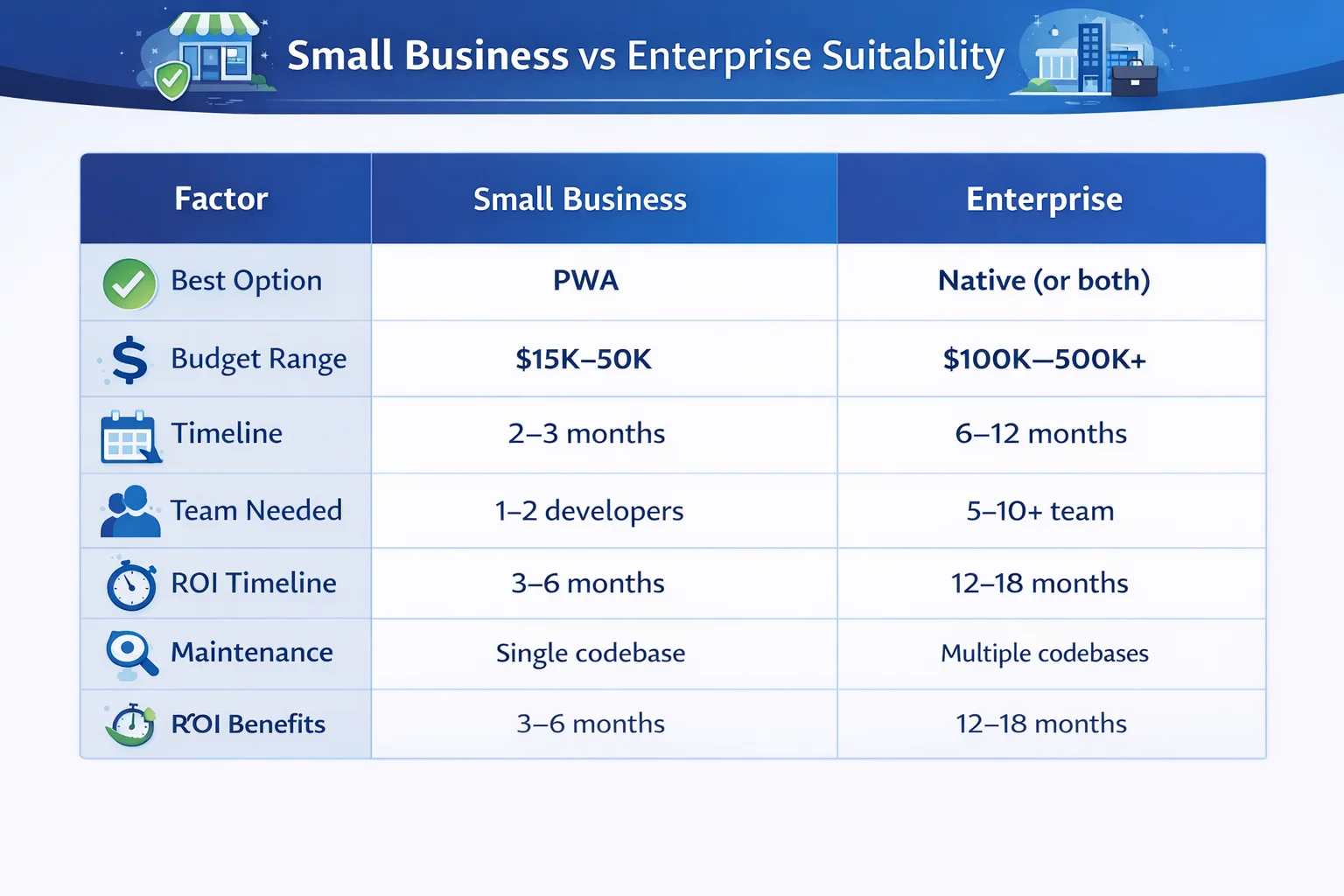
Here's the bottom line: PWAs and native apps solve different problems. PWAs slash your costs by half (sometimes more) compared to native app development services. They launch fast and work on everything from ancient Android phones to brand new iPads. Native apps? They're the Ferraris—gorgeous, powerful, expensive. You need native when your app has to squeeze every drop of performance or tap into specific phone features. With progressive web app development, you maintain one codebase instead of juggling iOS and Android separately. The whole mobile app vs web app thing boils down to three questions: How much can you spend? What features do you absolutely need? Who's using your app? If you're bootstrapping or testing an idea, PWAs are your best friend. Need AR filters or complex offline editing? Time to go native. Here's what smart companies do—launch a PWA first, learn what users actually want, then build native if the numbers make sense. Don't guess. Test cheap, then invest big. Any decent web application development company will tell you the same thing.