Your ERP tracks finances. Your CRM manages customer interactions. Your supply chain platform monitors inventory. But none of them communicates with each other.
Sitting across the table from IT directors managing 15 enterprise applications reveals a painful pattern—each system powerful on its own, each completely blind to what the others are doing. Orders from the CRM get manually re-typed into SAP. Inventory updates travel between departments via emailed spreadsheets. Financial reconciliation drags on for weeks because nobody trusts numbers from disconnected systems.
Businesses exploring ERP ecosystems often benefit from understanding integration strategies—whether that involves NetSuite integration architecture or SAP connectivity. The core problem remains identical: fragmented systems quietly drain revenue.
This is where SAP integration services separate enterprises that merely operate from those that genuinely perform. Not stitching applications together with workarounds—but constructing an intelligent integration backbone that turns your entire technology stack into one coordinated unit.
SAP integration services refer to the process of connecting SAP systems with external applications, APIs, and cloud platforms to enable seamless data flow, automation, and real-time business operations. They enable real-time communication between ERP, CRM, eCommerce, and third-party systems—improving efficiency, data accuracy, and decision-making.
Think of an SAP Integration Hub as the central nervous system of your enterprise technology stack. Every application, every database, every cloud service connects through this hub rather than through messy point-to-point links that break every time someone sneezes.
SAP designed this concept around a centralized middleware layer that routes, transforms, and orchestrates data flows between systems. Whether you're running SAP S/4HANA at the core, Salesforce for customer management, Shopify for e-commerce, or legacy mainframe applications from the previous decade, the integration hub handles communication between all of them.
The architecture operates on a fundamental principle: decouple everything. Instead of Application A needing to understand Application B's data format, language, and protocols, both simply speak to the hub. The hub translates, validates, routes, and delivers. When you add a new application next quarter, you connect it to the hub once, not to every other system individually.
This approach eliminates the spaghetti architecture that plagues most enterprises. I've audited companies running over two hundred point-to-point integrations. Every system upgrade threatened to break something else. Adding a new vendor connection required months of development. The integration hub collapses that complexity into something manageable and scalable.
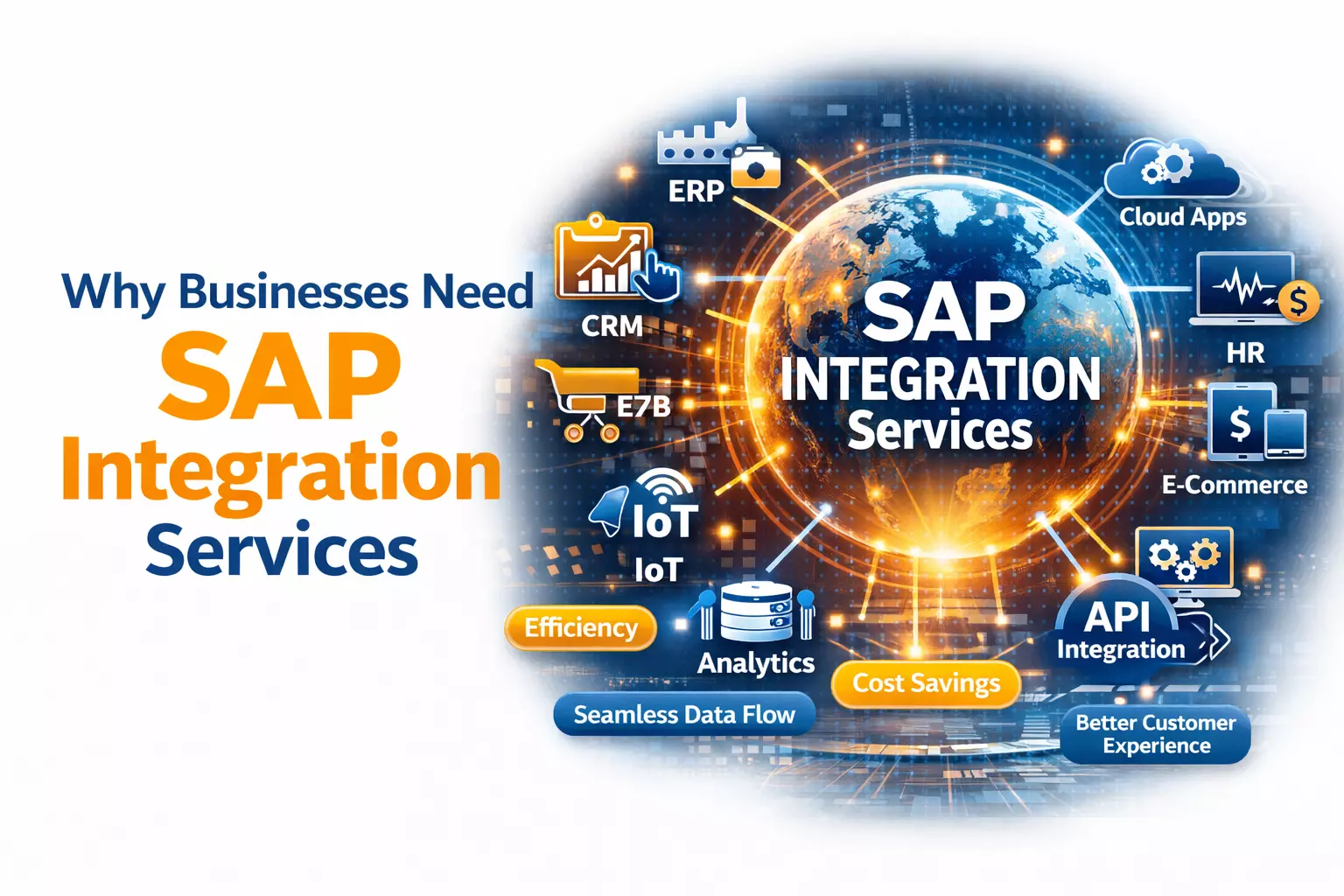
Disconnected systems don't just create inconvenience—they bleed money. According to MuleSoft's Connectivity Benchmark Report, enterprises lose an average of $500,000 annually due to system disconnection and failed integration projects. A manufacturing client we worked with discovered they were carrying $3.2 million in excess inventory because their procurement system couldn't see real-time production schedules.
Data silos destroy decision-making. When your finance team pulls revenue numbers from one system while operations tracks costs in another, the resulting reports are essentially fiction. Executives making strategic decisions based on inconsistent data might as well flip a coin.
Manual processes introduce errors at scale. Every time a human re-enters data from one system to another, error rates hover around two to five percent. Across thousands of daily transactions, that's hundreds of mistakes flowing through your business undetected.
Compliance and audit exposure multiply. Regulators don't care that your data lives in separate systems. They expect consistent, traceable records. Fragmented SAP data integration creates gaps that auditors exploit, and regulatory bodies penalize.
Customer experience suffers silently. When your sales team can't see order status, when support agents lack purchase history, when shipping notifications arrive after the package does, customers notice. They just don't complain. They leave.
Professional SAP integration services eliminate these bleeding points by creating reliable, automated data highways between every application in your ecosystem. Organizations evaluating broader ERP integration strategies will find that these same principles apply regardless of platform.
Choosing the right integration architecture determines whether your SAP landscape scales gracefully or collapses under its own weight. Three dominant patterns define modern enterprise SAP integration solutions:
Hub-and-Spoke Model: Every application connects to a central integration hub rather than directly to each other. The hub manages all routing, transformation, and orchestration logic. This model drastically reduces connection complexity—fifty applications need fifty connections to the hub instead of thousands of point-to-point links. Most SAP PI/PO implementations follow this pattern.
API-Led Architecture works differently. Think of it as three floors in a building. Ground floor—system APIs that grab raw data directly from your applications. Middle floor—process APIs where the actual business logic happens, stuff like pricing rules, approval chains, and inventory checks. Top floor—experience APIs that package data specifically for whoever's consuming it. A mobile app doesn't need the same data dump as a partner portal, right? Each gets exactly what makes sense for them. SAP API management on BTP keeps the whole building secure and well-governed.
Event-Driven Integration: Instead of scheduled batch transfers or request-response patterns, systems react to business events in real-time. SAP Event Mesh facilitates this model—when an order gets placed, an event fires that simultaneously triggers inventory allocation, warehouse picking, and invoice generation. No polling, no waiting, no stale data.
Most enterprise SAP integration solutions combine elements from all three patterns depending on specific use case requirements. The architecture that works for financial consolidation probably won't suit real-time e-commerce order processing.
PI/PO has been the workhorse of SAP integration for over fifteen years now. If your enterprise runs on-premise SAP, chances are PI/PO is somewhere in the mix, handling the complex stuff—message mapping that would make your head spin, routing rules with dozens of conditions, and error handling robust enough that operations teams actually sleep at night.
Building on PI/PO means working with graphical mapping tools, writing ABAP extensions, and configuring Java-based adapters. The platform really shines in high-volume B2B territory—EDI processing, IDoc communications between SAP systems, and SOAP web service orchestration that large trading networks still depend on daily.
Now for the uncomfortable truth: SAP has made it clear that PI/PO's maintenance window is getting smaller. That doesn't mean you should rip it out tomorrow morning. But if your critical business processes run through PI/PO and you don't have a migration roadmap sitting on someone's desk, that conversation needs to happen soon. Plenty of enterprises will keep PI/PO running alongside newer platforms during the transition. Just don't let "transition" quietly become "permanent."
Cloud Platform Integration—which SAP folded into the Business Technology Platform's Integration Suite—is where SAP is putting its money and development muscle going forward. Everything about CPI was built for the cloud from scratch. What scenarios make PI/PO sweat? CPI handles them without breaking stride. Cloud-to-cloud connections spin up fast. API orchestration stays lightweight. When transaction volumes spike during peak season, the platform scales elastically instead of falling over.
Development on CPI feels different from PI/PO. SAP maintains a content catalog packed with pre-built integration packages covering hundreds of common scenarios. Grab one, configure it, deploy it. For custom work, the integration flow designer paired with Groovy scripting gives developers the flexibility to build whatever transformation logic the business demands.
Where CPI really proved itself for us was connecting a retail client's Shopify storefront with SAP for inventory management, Stripe for payment processing, and ShipStation for logistics coordination. The entire orchestration ran cloud-to-cloud. Not a single on-premise server is involved. That kind of deployment simply wasn't possible with PI/PO.
Middleware does the unglamorous work that keeps everything running. Message queuing, protocol conversion, data transformation, transaction management—none of it makes exciting conversation at dinner parties, but all of it matters when your business processes depend on data arriving correctly and completely.
SAP's middleware stack handles asynchronous messaging, guaranteed delivery, and complex event processing. But the real measure of good middleware design comes down to one word: resilience. When a downstream system crashes at midnight on a Friday, properly configured middleware queues every message and replays them automatically once connectivity returns. No lost transactions. No frantic phone calls to the on-call developer. No Monday morning surprises waiting in someone's inbox.
APIs have become the universal language of modern SAP environments. RESTful APIs, OData services, GraphQL endpoints—they all serve the same fundamental purpose: giving applications standardized access to SAP data and processes without needing someone who understands the inner workings of every module.
SAP API management on BTP is basically the bouncer at the door. It decides who gets in, how much they can consume, and keeps troublemakers out. Security policies lock down access at a granular level. Rate limiting stops one rogue application from eating all your bandwidth. And the analytics piece? That's the part most people ignore until they need it—suddenly you can see exactly which integrations are getting slammed with requests and which ones nobody has touched in six months.
The practical upside is huge. You can open up SAP data to external partners, let mobile apps pull what they need, connect third-party platforms—all without worrying that some poorly written integration is going to bring your production system to its knees. More and more companies pursuing digital transformation strategies are starting with API design before anything else.
Talk to anyone who's tried building SAP integrations from a PowerPoint deck, and they'll tell you the same thing—it looked great in the meeting room and fell apart the moment real data hit the pipes. AD Infosystem doesn't hand you architecture diagrams and wish you luck. We write the code, test the interfaces, fix what breaks, and stick around when production gets messy.
A pharmaceutical distributor came to us with a problem that nobody's pre-built connector could solve. They needed batch number traceability moving from SAP MM through their warehouse system into FDA regulatory reporting. Every single handoff point demanded validation logic specific to their compliance requirements. They'd already tried two off-the-shelf solutions. Both failed within a month.
Our team built custom iFlows on SAP CPI and PI/PO message mappings configured around their actual operations. Not textbook scenarios—real ones. The kind where source data arrives in three different formats depending on which warehouse shipped it, routing changes based on product classification, and exception handling needs to account for what actually goes wrong on a Thursday night during quarter-end crunch.
Migration conversations used to start with "maybe someday." Now they start with "how fast can we move?" SAP keeps shrinking PI/PO's support timeline, and nobody wants to be the last company standing on a platform heading toward end-of-life.
But here's what makes migration genuinely difficult—your business doesn't get to pause. Orders still need processing. EDI documents still need to flow. Finance still needs their numbers. You can't just flip a switch and hope for the best.
We treat migration like renovating a kitchen while still cooking dinner every night. Inventory every active interface first. Sort them—simple versus complex, critical versus nice-to-have. Migrate the straightforward ones early to build rhythm and confidence. Then attack the complicated stuff using patterns established in earlier rounds. Both old and new systems run side by side until the replacement proves itself completely. Three hundred active interfaces were migrated for one client. Zero days of unplanned downtime.
Launching an integration project and walking away is like buying a car and never changing the oil. Things work great until they don't, and by then the damage is expensive.
APIs get retired without notice. Connected systems push silent updates that change data structures just enough to break your flows. Holiday traffic spikes overwhelm interfaces designed for Tuesday afternoon volumes. AD Infosystem watches your integration landscape around the clock—health monitoring, anomaly detection, incident response, and performance adjustments. A full integration operations crew without the hiring headache.
Discovery first. Map every system, every dependency, every undocumented workaround living inside someone's head. Find the problems now, not during go-live week.
Architecture second. Hub-and-spoke for some flows, API-led for others, event-driven where speed matters. Usually a combination. Every decision is documented so your team knows the reasoning, not just the result.
Build in sprints. Each sprint delivers testable, working interfaces. Testing happens continuously—not crammed into the last five days before launch.
Deploy in phases. Critical interfaces get extra monitoring early on. The stabilization window catches edge cases that only appear under real production pressure.
Keep improving. Post-launch reviews surface performance bottlenecks, recurring error patterns, and new integration opportunities that the business didn't see before the foundation existed.
Project-Based — Fixed scope, clear timeline. Best when you know exactly what needs connecting.
Dedicated Team — Our developers are embedded inside your IT organization for ongoing integration work across business units.
Managed Services — We own your entire integration landscape. Monitoring, maintenance, incidents, and improvements. Enterprise reliability without building the team internally.
Forrester's research puts a number on what most IT leaders already feel in their gut—companies running proper integration platforms cut operational waste by roughly thirty percent. But the benefits that actually matter day-to-day go beyond percentages:
ERP-CRM Synchronization: A professional services firm wired SAP S/4HANA to Salesforce with bidirectional data flowing between both systems. Sales reps stopped double-entering customer records. Finance stopped arguing about why CRM pipeline numbers never matched ERP bookings. Problem solved.
E-commerce Order Orchestration: An online retailer connected Magento, Amazon Marketplace, and their logistics provider directly into SAP. Orders from every channel route automatically for fulfillment. Inventory syncs across all storefronts in near real-time. Overselling incidents essentially vanished. Companies facing similar web application development challenges consistently find that integration architecture decides whether their e-commerce stack actually scales.
Supply Chain Visibility: A manufacturer linked SAP MM with supplier portals, transportation management, and warehouse automation. Procurement teams stopped chasing paperwork and started negotiating better deals.
Financial Consolidation: A holding company automated intercompany reconciliation across multiple SAP instances. Month-end close dropped from three weeks to four days.
| Criteria | SAP PI/PO | SAP CPI (Integration Suite) |
|---|---|---|
| Deployment | On-premise | Cloud-native |
| Architecture | Traditional middleware | Lightweight, API-first |
| Scaling | Requires hardware provisioning | Elastic auto-scaling |
| Best For | High-volume on-premise B2B, IDoc, EDI | Cloud-to-cloud, hybrid, API orchestration |
| Development | Java mapping, ABAP, graphical tools | Integration flow designer, Groovy scripting |
| Pre-built Content | Limited | Extensive content catalog |
| Maintenance | Customer-managed infrastructure | SAP-managed platform |
| Future Roadmap | Maintenance mode (narrowing window) | Active development, SAP's strategic direction |
| Cost Model | License + hardware + operations | Subscription-based |
| Migration Path | Migrate to CPI/Integration Suite | Native platform evolution |
SAP CPI vs PI/PO migration—which scenario fits? If you're running heavy on-premise workloads with complex EDI requirements and can't migrate overnight, PI/PO still serves its purpose. For everything else—especially greenfield integration projects, cloud migrations, and hybrid landscape connectivity—CPI is the clear direction forward.
Most enterprises we encounter end up running both SAP integration tools during transition. The smart ones plan their migration deliberately rather than waiting for forced deadlines.
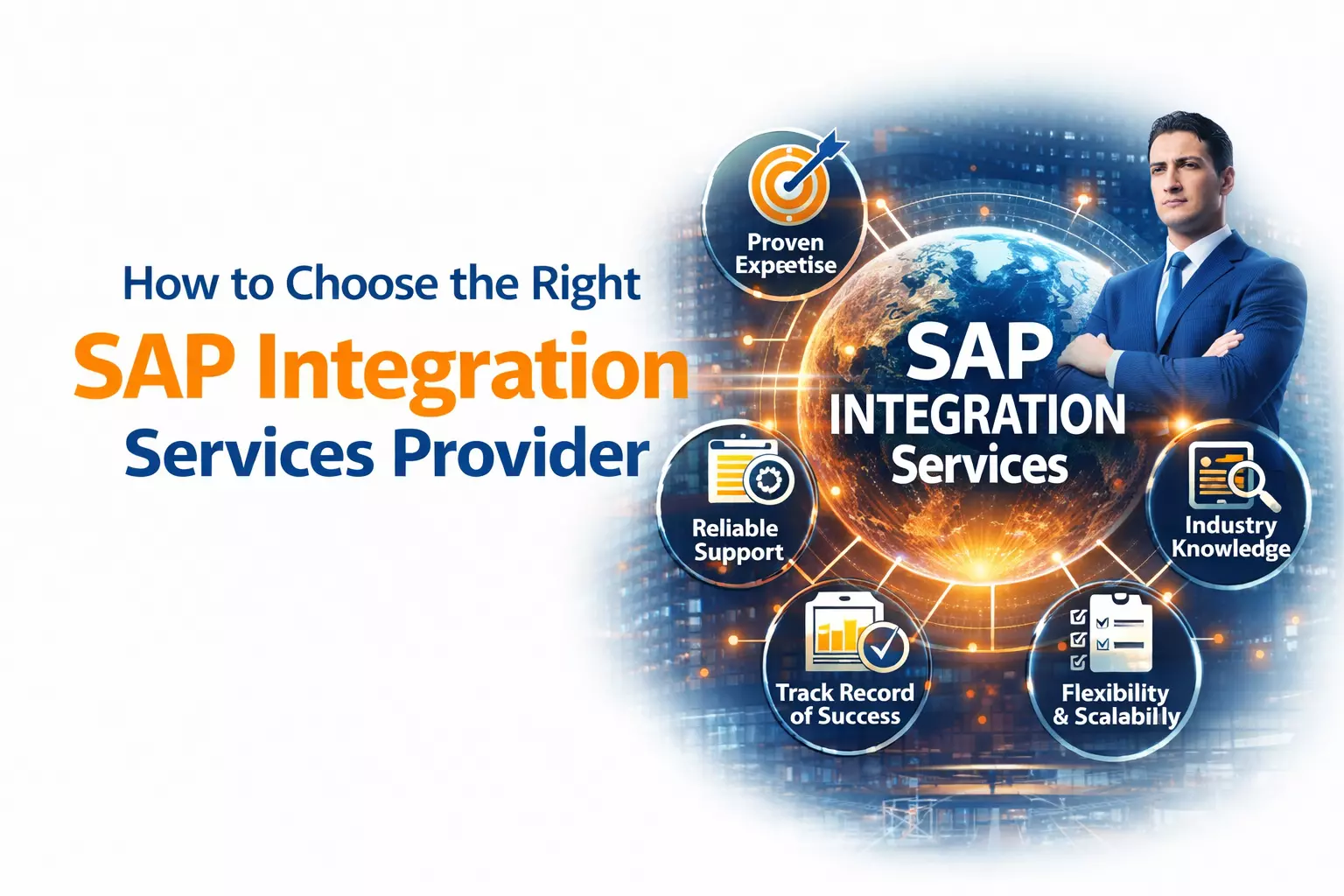
Most companies treat partner selection like a procurement exercise—compare rates, check certifications, pick the cheapest option that ticks enough boxes. Then they spend the next three years living with the consequences. A wrong choice here doesn't just burn the budget. It plants technical debt so deep into your systems that cleaning it up costs more than the original project.
Before signing anything, run candidates through these filters:
Can they actually build, or just talk? Ask them to walk through a real PI/PO migration they completed. Not a case study from their website—a genuine project with complications they had to solve. Get them to explain CPI iFlow development without reaching for slides. If their technical depth evaporates past the sales pitch, keep looking.
Do they know your industry? Integration patterns in manufacturing look nothing like retail or professional services. A partner who built brilliant integrations for a bank might completely miss the nuances of your supply chain. Generic SAP knowledge without industry context produces solutions that technically work but operationally miss the mark.
Can they handle the ugly stuff? Every enterprise has that one ancient system running on technology from another era. Mainframe connections, flat file processing, proprietary protocols nobody documents anymore. If a provider only wants to talk about modern APIs and cloud-native architecture, they haven't spent enough time in the trenches where real enterprise IT lives.
Have they migrated PI/PO successfully? This isn't theoretical anymore. SAP keeps tightening the maintenance window. Any serious SAP integration services provider should walk you through their migration methodology with specific examples of moving production interfaces to Cloud Integration without blowing up daily operations.
What happens after go-live? Integration landscapes demand constant attention. Systems update, APIs deprecate, volumes shift. Partners who celebrate the launch and then vanish leave you exposed exactly when reliability matters most. Pin down their support model before the project starts, not after something breaks.
Do they design before they build? This one separates professionals from cowboys. Providers who jump into development without a documented discovery and architecture phase will cost you double when things inevitably need rebuilding. If they can't show you their design methodology, they're winging it on your dime.
AD Infosystem carries deep hands-on experience across PI/PO, CPI, and hybrid landscapes—combined with enterprise system integration expertise that connects SAP with practically any platform sitting in your technology stack.
Jumping straight into building. Watched it happen more times than I can count. Someone in leadership says, "We need integration," and two weeks later, developers are writing code. Nobody mapped the data flows. Nobody documented the exception scenarios. Nobody asked how many transactions actually hit the system during peak hours. Six months down the road, the whole thing gets torn apart and rebuilt. Discovery isn't the exciting part of any project, but skipping it is the most expensive shortcut you'll ever take.
Making everything complicated. Engineers love elegant solutions. The problem is, not every data flow deserves one. Sometimes a basic scheduled batch transfer handles the job perfectly well. But instead, teams build real-time processing pipelines with complex transformation logic and enterprise-grade error handling for a feed that runs once a day and moves fifty records. Match the complexity to what the business actually needs, not what looks impressive in a technical review.
Bolting on error handling as an afterthought. Integration flows behave beautifully in testing environments with clean data and predictable volumes. Then production happens. Weird payloads show up. Systems timeout at random. Volumes spike without warning. Build alerting, retry logic, and dead letter queues into the design from day one—not after the first disaster wrecks a month-end close and everyone spends the weekend in a war room.
Walking away after launch. Connected systems never sit still. APIs get deprecated. Data models grow. New applications show up in the landscape every quarter. Organizations that treat integration as a one-and-done project watch their shiny new integration layer slowly rot into the exact same disconnected mess they originally tried to fix. Companies that understand IT maintenance as an ongoing discipline handle integration support the same way.
AI is already inside the monitoring stack. SAP BTP doesn't just show you pretty dashboards anymore. Under the hood, algorithms chew through message traffic patterns constantly—spotting weird data behaviors that no human operator would catch until something actually broke. Predicting failures before they snowball into the kind of outage that gets executives on emergency calls at midnight. We had a client where the system detected a subtle data format drift creeping into their invoicing pipeline. Flagged it three days before it would have corrupted live transactions. Nobody asked it to look for that specific problem. It just found it. This stuff isn't sitting on some future release roadmap. It's running in production today.
Batch processing is dying a slow death. Event-driven architectures through SAP Event Mesh are steadily replacing those overnight batch jobs that everyone tolerates, but nobody loves. A customer places an order and within seconds—not hours, not overnight—inventory allocates, the warehouse gets notified, shipping labels generate, and the invoice queues up. Systems reacting to business events as they happen instead of waiting for a scheduled window that made sense in 2008.
Everything becomes an API. More organizations are treating every SAP function as a service that other applications can consume. The result? Composable business applications that mix SAP capabilities with non-SAP tools, however the business needs them. No more monolithic thinking where everything must live inside one platform.
Clean core isn't just a buzzword anymore. SAP S/4HANA Cloud adoption is pushing companies to move their integration and extension logic out of the ERP core entirely and onto the BTP layer. Smart move—keeps the foundation upgrade-safe while giving teams unlimited flexibility to build, extend, and integrate without touching the core system.
Process automation and integration are merging. SAP Build Process Automation, combined with integration flows, creates something genuinely powerful—end-to-end orchestration that handles routine exceptions, approvals, and decision points without a human touching anything. What are the manual steps that used to sit between automated flows? Those gaps are closing fast.
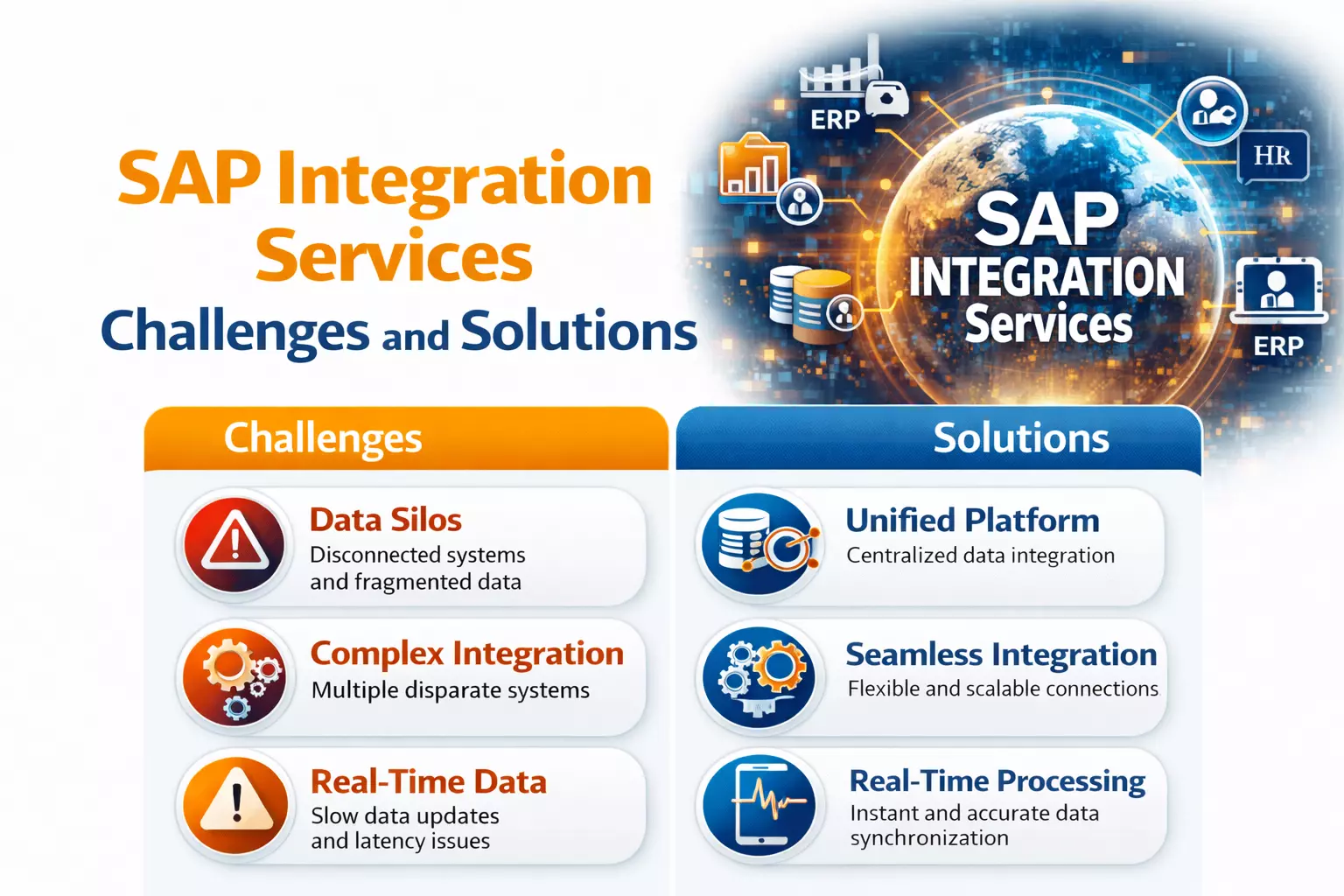
Nobody looks forward to this conversation. Three hundred PI/PO interfaces running in production, some built years ago by people who left the company, and leadership wants them all moved to Cloud Integration. The only sane approach? Sort them ruthlessly. Business-critical but technically simple interfaces migrate first—builds team rhythm and creates reusable patterns. That complex monster interface with forty mapping rules and custom Java code? It can wait until the team has battle scars from earlier rounds. Trying to migrate everything simultaneously is how weekends disappear.
Before integration, dirty data stayed contained in whatever system created it. After integration, one corrupted customer record propagates across five applications before anyone notices. The fix isn't just cleaning data at the source—that's necessary but insufficient. Build validation directly into the integration layer itself. Catch mismatched formats, missing fields, and logical inconsistencies while data is in transit, before it reaches downstream systems and multiplies the cleanup effort tenfold.
Connecting cloud platforms to on-premise SAP systems opens doors that didn't exist when everything lived behind your firewall. SAP Cloud Connector handles secure tunneling, but installing it and configuring it properly are two very different things. Network segmentation, certificate management, and least-privilege access controls—each one needs deliberate attention. The companies that treat hybrid security as a checkbox exercise are the ones reading about themselves in breach notification reports.
Integration infrastructure sized for normal Tuesday afternoon volumes will absolutely choke during month-end close, quarter-end reporting, or holiday sales spikes. Seen it happen repeatedly. Design for peak capacity from the start, not average. Implement message throttling so one burst of transactions doesn't starve everything else. Use asynchronous patterns wherever the business can tolerate slight delays—most flows don't actually need millisecond responses, they just got built that way because nobody asked the question.
Every year, the problem gets worse, not better. Another cloud application gets added. An acquisition brings three more systems nobody planned for. A new regulatory requirement demands data from platforms that have never exchanged a single record. The distance between where your data actually sits and where your business needs it keeps stretching wider.
The companies winning right now aren't the ones with the fanciest technology stack. They're the ones where everything talks to everything else without someone manually carrying data between screens. Real-time inventory that sales teams actually trust. Orders flow from capture to delivery without sitting in anybody's queue. Financial reports that close in days because the numbers reconcile themselves. Customer experiences that feel seamless because the systems behind them genuinely are.
Whatever stage your integration journey has reached—keeping existing PI/PO landscapes stable, planning the migration toward SAP CPI and the Integration Suite, or designing a brand new integration strategy on SAP BTP from scratch—the architectural choices landing on your desk today will define how fast your business can move for years to come.
AD Infosystem builds SAP integration services end-to-end. PI/PO development, CPI implementation, SAP API management, enterprise middleware—the full picture. We don't just wire systems together and hand over documentation. We engineer integration architectures designed to grow at the same pace as your ambitions do.