
Nearly three-quarters of fast-growing businesses struggle as their technology fails to keep up with their ambitions. In contrast, companies embracing custom software see a crucial advantage: revenue accelerates well beyond the growth in their tech spending, proving that technology can drive efficient, scalable progress.
Growth creates chaos for successful businesses. Doubling your customers multiplies your behind-the-scenes complexity; the tools that got you started begin to buckle. Off-the-shelf software that seemed affordable now demands expensive add-ons and workarounds, costing you just when you need cash for expansion.
Smart companies are flipping this script entirely. They're building software that fits their business like a glove, not forcing their business into software designed for someone else. The results speak for themselves: costs per transaction drop, new features roll out faster, and they can pivot on a dime while competitors wrestle with rigid systems. This shift sets the stage for a fundamental change in how growth is managed.
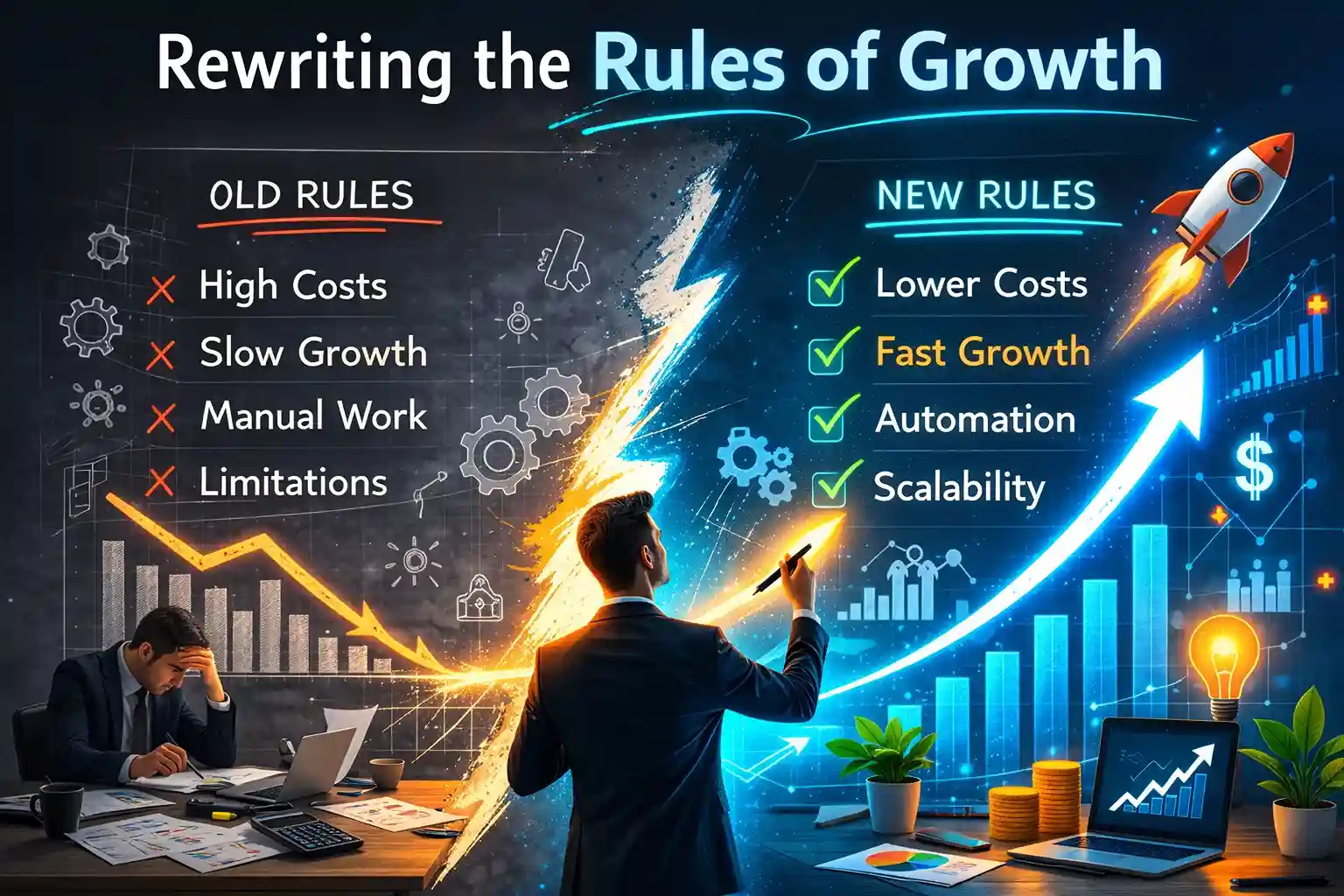
Remember when growing meant hiring at the same pace as sales? Those days are gone. The old playbook said double your revenue, double your team, double your overhead. Everyone nodded along, accepting that growth had to be painful and expensive.
Custom-built technology breaks the cycle of inefficiency. When software mirrors exactly how your business operates, tasks that once tied up teams now flow automatically. Data that was siloed is now shared. Decisions needing committees happen instantly. The right custom solution transforms operational friction into seamless progress.
Where it gets interesting: the benefits multiply as you expand. Take a business processing a thousand orders daily. With the right foundation, jumping to ten thousand orders doesn't mean ten times the hassle—it might just mean tweaking a few settings. Information that used to require hours of manual work now flows like water through connected pipes.
This is why tech-savvy startups seem to defy gravity. They're not playing by the same rules. While traditional companies add cost with every new customer, these businesses barely feel the difference between serving hundreds or thousands. They've turned technology from a necessary evil into their secret weapon.
Most people think custom software means fancy apps. That's like saying architecture is about picking paint colors. The real power lies in creating a technology foundation that sets the stage for everything you'll do next. It's the difference between renting space in someone else's building and constructing your own headquarters exactly how you need it.
Think of it as building in layers. Your data lives in structures designed for your specific insights, not generic templates. Your business logic runs exactly as you've refined it over the years, not how some software company thinks it should work. Connections to other tools happen naturally, not through expensive band-aids. Your team sees screens that make sense for their actual jobs, not interfaces designed for "everyone."
The best part? Today's technology lets you build without painting yourself into corners. Smart architecture means pieces can grow and change independently. Everything talks through clear channels. Workloads scale up and down as needed. You're building for tomorrow, not just solving today's problems.
This shift in thinking is pivotal: Stop asking what software costs—start asking what it enables. Technology isn’t just another budget line; it’s the foundation of your future success. The equation becomes clear: tomorrow’s winners are building their edge today.
Most CEOs assume that scaling means bleeding cash in proportion: double the customers, double the costs, double the headaches. That's the accepted wisdom, and it's dead wrong. Custom software flips this equation on its head. With off-the-shelf products, you're stuck paying more as you grow—per-user fees, tier jumps, surprise charges. But when you own your technology, the math works in your favor.
Think about it this way. Your first thousand transactions might cost a dollar each to process. By the time you hit a million? You're down to pennies. Why? Because the heavy lifting is already done. Your servers get smarter about handling requests. Your database learns the patterns and speeds up. The expensive parts—building and setup—spread thinner across every new customer.
These savings go beyond just server expenses. Owning your system eliminates yearly vendor negotiations and brings predictability to your technology budget. You may even benefit from improved tax treatment. Most importantly, as your costs drop and competitors' rise, you strengthen your pricing power in the market.
When you create your own technology, you're not just solving problems—you're building assets. That special way you handle customer complaints? It's now an automated system your competitors can't touch. The pricing formula you've perfected over the years? It's baked into code they'll never see.
This goes beyond just offering different features. You create customer experiences impossible with packaged products. Your recommendation engine knows your specific customers, not a generic profile. Your quality checks align with your standards, not industry averages, and every enhancement strengthens your advantage.
The smartest companies have figured out that renting the same tools as everyone else is a recipe for looking like everyone else. When five companies use the same CRM, they offer the same experience. When you build your own? You're playing a different game entirely. And unlike rented features that anyone can turn on tomorrow, what you build is yours forever.
Growing companies thrive on partnerships, but packaged platforms act like jealous gatekeepers. "Sorry, we don't integrate with that." "That'll require our Enterprise plan." "Our API doesn't support that function." Sound familiar?
With your own architecture, those roadblocks disappear. Easily connect to a supplier's ancient inventory system by building the needed bridge. Enable customers to directly access specific features by opening the right doors. Acquiring a company with different technology? Integrate both systems without rebuilding from scratch.
If a partner’s system goes down for maintenance, yours stays up. One supplier sends data in Excel, another uses APIs? No problem—your system speaks both languages. Holiday rush coming? Dial up the connections. Quiet season? Dial them back. Most platforms don’t offer this flexibility.
Every partnership makes you stronger. That scrappy startup with the killer feature? They're enhancing your offering now, not stealing your customers. The regional expert who knows every local quirk? They're seamlessly part of your service. Customers just see everything working perfectly together—they don't need to know about the complexity you're managing behind the scenes. Your competitors? They're still writing emails begging their vendor to "consider" an integration.
This advantage surprises many: custom systems can improve in speed as they scale. More users and more transactions can lead to faster and more efficient processes, not more delays. The benefit is that your system gets smarter and quicker as your business grows.
Think of your system like a veteran bartender on New Year's Eve. While rookies panic at the three-deep crowd, the pros are already pouring your usual before you reach the bar. They've seen every combination, know what follows what, and their hands move on autopilot. Your custom system develops that same muscle memory. That complex calculation that used to freeze everything for thirty seconds? Now it runs in the background because the system learned you need it every Monday at 9 AM sharp.
Speed is just the appetizer. The main course is rock-solid reliability tailored to your exact needs. Running a medical practice? Build Fort Knox around patient data while keeping appointment booking lightning-fast. In finance? Create bulletproof audit trails without slowing down trades. Your compliance isn't some checkbox exercise—it's woven into the fabric of how your system operates, checking and protecting exactly what matters for your business.
Markets shift. Regulations change. Competitors make moves. New opportunities appear. With custom technology, you respond at market speed, not vendor speed. This flexibility might be the biggest advantage of all.
Want to test a subscription model alongside traditional sales? Flip a switch. Expanding internationally? Add local requirements without rebuilding. New product line? Extend what already exists instead of starting from scratch. Each change builds on your foundation rather than fighting against it.
Remember when privacy laws changed overnight, and half the business world panicked? Companies with custom systems updated their data handling over the weekend. The rest spent months waiting for vendors to figure it out. Or when customers suddenly wanted everything delivered yesterday? Agile systems adapted. Rigid ones broke.
The long game makes this crystal clear. Nobody knows what markets will demand in five years. Customer expectations will shift. New competitors will emerge. Technology will evolve. Companies that control their own destiny will adapt and thrive. Those waiting for vendors to catch up? They'll still be waiting. Given these stakes, it's important to consider how custom development compares to other technology approaches.
Let's get practical here. Custom software isn't always the answer—sometimes you're overthinking it. If you're running a standard accounting firm or basic retail operation, off-the-shelf solutions work just fine. No shame in that game. The trick is knowing when you've outgrown the standard playbook and need something built for your specific brand of crazy.
Think of it like choosing between renting, leasing, or building a house. Each makes sense at different life stages.
Going Custom is like building your dream home. Yeah, you'll write bigger checks upfront—sometimes eye-watering ones. But here's what happens next: your monthly costs start dropping while everyone else's keep climbing. You can knock down walls, add rooms, paint it purple—whatever your business needs. No landlord telling you what you can't do. When you want that smart home system, you install it tomorrow, not when your vendor gets around to it. The place is yours to modify however you want, forever.
SaaS Solutions feel great at first—like moving into a furnished apartment. Low move-in costs, everything's already set up, maintenance included. Perfect when you're starting out. But watch what happens when you grow. Suddenly, you need more seats? Price jump. Want to store more data? Price jump. Need advanced features? "That's only in our Enterprise tier." Before you know it, you're paying luxury condo prices for an apartment you can't even paint.
Off-the-shelf software sits somewhere awkward in the middle. It's like buying a prefab house—cheaper than custom but pricier than renting. You own it (sort of), but good luck moving walls around. Want to connect it to your smart garage door? Better hope someone makes an adapter. Need it to work differently? Maybe the next version will help... in two years... if enough other customers want the same thing.
When you map out the real costs over five years, the picture gets clearer. Custom development front-loads the pain—you're paying for architects, builders, materials. But by year three? You're cruising while SaaS customers watch their bills multiply with every new employee. That "affordable" $50 per user per month becomes $50,000 per month when you hit 1,000 employees. Meanwhile, your custom system just hums along, handling ten thousand users for the same infrastructure cost as one thousand.
The control factor changes everything, too. With custom, you decide what gets built next based on what customers actually want. With SaaS, you're submitting feature requests into the void, hoping they align with what the vendor thinks their average customer needs. Spoiler alert: you're not average, and neither are your customers.
Performance tells another story. Your custom system learns your patterns and gets faster. It knows your busy season is October, not December like everyone else. It optimizes for your specific workflows, not generic use cases. Try getting that from software designed to please millions of different businesses.
The harsh truth? If you're planning to stay small and standard, custom software is overkill. But if you're building something unique, trying to scale aggressively, or competing on customer experience, then forcing your business into someone else's software box is like running a marathon in borrowed shoes. They might work, but they'll never help you win.
You know that moment when your car starts making weird noises, but you keep driving anyway? That's what most businesses do with software problems—ignore the warning signs until something breaks spectacularly. Let's talk about the red flags that scream "time for custom software" before you end up stranded on the highway.
First sign you're in trouble? Your software bill grows faster than a teenager. Revenue up 20% this year? Fantastic. Software costs up 40%? Not fantastic. You're working harder to pay your vendors more money. That's not a business model—that's a hostage situation.
Watch for the death-by-a-thousand-cuts scenario. $500 more for this feature. $1,000 for that integration. "Oh, you need API access? That's our Platinum tier." Before long, you're spending more on software Band-Aids than you would've spent building exactly what you need.
Your team members are brilliant problem-solvers. They have to be—they spend half their day inventing workarounds for software that fights them at every turn. Sales teams manage deals in spreadsheets because the CRM "doesn't quite handle" their process. Operations teams with Post-it note systems because the software "wasn't designed for that."
The Excel spreadsheet addiction is real. When you've got seventeen spreadsheets doing work your main system should handle, that's not resourcefulness—that's desperation. Your star employees shouldn't waste their talent playing the role of a software circus performer, juggling three systems to complete a single task.
Picture this nightmare: Your biggest prospect is sitting across the table, checkbook ready. They need one thing—direct integration with their system. You have to look them in the eye and say, "Your software can't do it." Or that game-changing partnership everyone's excited about? Dead on arrival because your vendor thinks APIs are "coming in Q4... maybe." That perfect market opportunity you spotted? Someone else will grab it while you wait for permission to compete.
Each time you say "our system doesn't do that," you're basically lighting money on fire. Your competitors with custom systems? They're too busy counting revenue to hear your excuses. Nobody cares that your vendor promises amazing things "in the next release." Customers pay for what works today, not what might work tomorrow.
Remember when adding new customers felt exciting instead of terrifying? If scaling up means proportionally scaling headaches, your software has become a growth inhibitor. Good systems make expansion easier. Bad ones make you secretly hope sales slow down so operations can catch up.
The manual process plagues spreads quietly. That temporary workaround from two years ago? Still manual. The "quick fix" that would be automated "soon"? Still waiting. New employees spend their first month learning byzantine workflows because "that's how the system works." If your training documents look like ancient scrolls detailing mystical rituals, you've got problems.
Want to test a new pricing model? Six-month vendor timeline. Need to enter a new market segment? Your software doesn't support their requirements. Trying to improve customer experience? You're limited to the vendor's idea of "good enough."
Meanwhile, your competitors are shipping updates like clockwork. They hear what customers want on Monday and deliver by Friday. You? Still waiting for that "urgent" request from last January to make it past the vendor's "review committee." They're playing jazz while you're stuck with a player piano—same tune, no improvisation allowed.
The ultimate indicator? When ideal prospects choose inferior competitors because those competitors can actually deliver what's promised. Your sales team knows your product is better, but they also know your systems can't meet customer expectations.
You hear it in every meeting now. "Why can't I just..." followed by something completely reasonable that your software turns into a three-ring circus. Your team is building Rube Goldberg machines to do basic tasks. Five-minute jobs eat up whole afternoons because the software fights you at every turn.
These problems compound. Software limitations force process compromises. Process compromises create customer friction. Customer friction limits growth. Limited growth constrains investment. It's a doom loop that only accelerates.
The smart money recognizes these patterns early. They see custom software not as an expense to avoid but as the key to breaking free. Because here's the secret: by the time these problems become painful enough to force action, you've already lost ground to competitors who saw them coming.
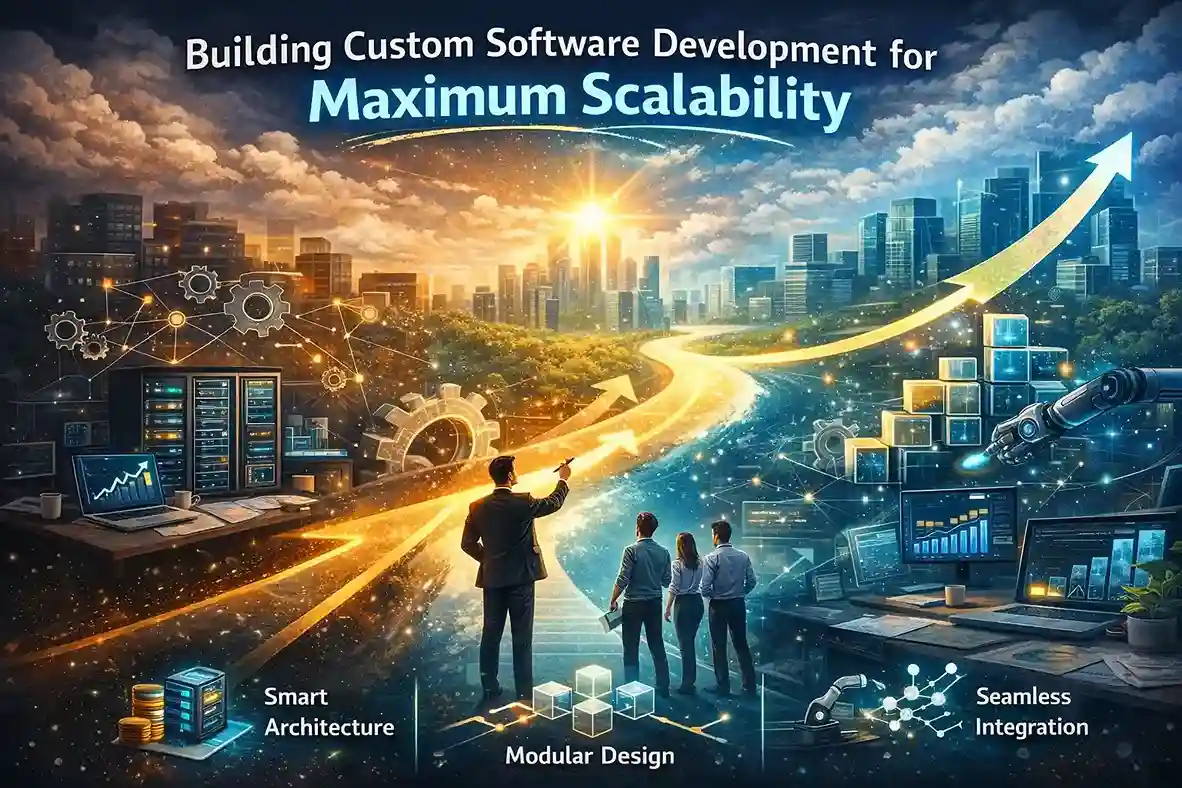
The biggest mistakes in custom software happen before anyone writes a single line of code. Teams get excited about features, rush into development, and build elaborate solutions to poorly understood problems. Six months later, they're wondering why their expensive new system creates more headaches than it solves.
First, map out everything that drives you nuts about your current setup. Not just the big disasters, but all those daily paper cuts. That report that takes three hours to generate? Write it down. The five-step process that should be one click? Document it. Lost that million-dollar deal because your system couldn't handle their requirements? Definitely include that one. This is where AD Infosystem's discovery process really pays off—they've seen enough projects go sideways to know you can't skip this homework.
Now here's the architect-level thinking: the choices you make in these early days will haunt or help you for years. If you're building for a business that might expand internationally, don't hardcode everything in English. Think your customer base might 10x? Don't design database structures that'll melt at scale. It's like building roads—sure, two lanes work fine today, but if you know traffic's coming, plan for four. AD Infosystem architects have been burned enough times to know these patterns—they build for the business you're becoming, not just the one you are today.
Picking your tech tools is a balancing act. You want proven stuff that won't disappear next year, but not dinosaur technology that developers hate. Think Toyota Camry, not bleeding-edge Tesla prototype. Boring? Maybe. But boring keeps working when trendy breaks down. AD Infosystem's tech stack philosophy is simple: battle-tested frameworks that'll still have support in five years, not whatever's trending on Twitter this week.
Forget the old way of disappearing for eighteen months, then unveiling some massive system. That's how you build expensive disasters. Instead, think of a TV series, not a movie. Each episode delivers something complete and useful.
Start with the foundation—the boring stuff that makes everything else possible. Get your data house in order. Make sure security isn't an afterthought. Then layer on actual business features, one valuable piece at a time. Maybe month one just eliminates that painful manual report. Month two automates the approval workflow everyone hates. By month six, you've transformed how the business runs, and everyone has benefited along the way.
Success speaks the language of business, not technology. Nobody cares that you decreased latency by 200 milliseconds. They care that orders are processed instantly instead of overnight. Skip the jargon—talk money saved, hours reclaimed, customers kept happy.
Getting people to actually use new tools is half the battle. I've seen gorgeous systems gather dust because no one bothered to teach the humans how to use them. Smart teams bring users along for the ride. Show them early versions. Listen when they say, "This makes my job harder." Fix it before it's carved in stone.
Launching is just the beginning. Now you tune this thing like a race car. Watch how people actually use it (spoiler: never how you expected). Notice where things slow down. Find the features nobody touches, and the workarounds people invent.
Think of it like breaking in new hiking boots. At first, everything's stiff. After some miles, you know where they rub, where they support, where they need adjustment. Your software's the same—it needs to be worn in and adjusted to fit perfectly.
Testing for scale isn't about normal days—it's about your worst nightmare scenarios. Black Friday traffic. End-of-quarter crushing loads. At that time, marketing accidentally sends every customer to your site at once. If your system survives your disaster testing, it'll handle whatever reality throws at it.
The best systems keep getting better without getting more complex. Regular tune-ups catch problems while they're small. Fresh eyes spot opportunities that the daily users miss.
Documentation stays current (novel concept, right?). Teams learn new tricks. It's maintenance, not magic—but it makes the difference between systems that last for decades and ones that are replaced every few years.
Forget vanity metrics. You need numbers that predict the future, not just describe the present. Can your system handle 10x the current load? Not "theoretically"—actually handle it without catching fire. Track how fast you can spin up extra capacity when that viral moment hits.
Watch the trend lines, not just today's numbers. Is each transaction getting cheaper to process as you grow? Good—that's the whole point. Response times creeping up month by month? Red flag—something's not scaling properly. Storage doubling every three months? Better figure out why before it bankrupts you.
Smart monitoring catches problems before humans notice them. Set alarms for weird patterns, not just outages. That database query that usually takes 0.1 seconds but occasionally spikes to 10? That's tomorrow's crisis announcing itself today.
The real scorecard lives in your P&L statement. Revenue per employee should climb—same headcount handling more business. Customer acquisition costs should drop—better systems mean smoother onboarding. Time from idea to market should shrink—no more waiting for vendor permission to innovate.
Daily operations tell the real story. How long to process an order? Handle a return? Onboard a partner? These numbers directly impact customer happiness and team sanity. When processes that took hours take minutes, when error rates plummet, when customers stop calling with complaints—that's success you can bank.
Look ahead, not just around. How fast can you enter new markets? Launch new products? Acquire competitors and actually integrate them? The companies eating everyone's lunch aren't necessarily smarter—they're faster. Custom systems make speed possible.
Simple—it's built for your specific chaos, not generic problems. Package software treats everyone the same, which means it handles nobody perfectly. Your custom system knows your busy season, your customer patterns, and your weird edge cases. It's like having a suit tailored versus buying off the rack. Both cover you, but only one fits perfectly.
The real magic happens in the architecture. Generic software scales by adding more of the same—more servers, more licenses, more problems. Custom systems scale intelligently. They cache what matters to you. Optimize your specific bottlenecks. Grow in the directions you're actually headed, not where the vendor guessed average companies might go.
It depends on what you're building. A focused tool for one department? Think nice car money—significant but manageable, pays for itself within a year or two. Platform to run major operations? Now you're in house territory—six figures, but transformational impact. Bet-the-company transformation? Seven figures potentially, but you're building the foundation for everything that comes next.
Don't just count the checks you write—count the opportunities you capture. Factor in the deals you won't lose to system limitations. The efficiency gains compound annually. The ability to pivot when markets shift. Smart companies see it as building an asset, not buying an expense.
Before it's painful. The perfect time is 6-12 months before you hit the wall. Watch for warning signs: software costs growing faster than revenue, workarounds becoming standard procedure, growth opportunities declining due to technical limits, and competitors moving faster despite inferior products.
If you're already in crisis, you've waited too long—but better late than never. Just expect a rougher transition. It's like fixing the engine while driving—possible but not pleasant.
The game's changed. You don't need server rooms and huge IT teams anymore. Cloud computing killed those barriers. Start small—fix your biggest bottleneck first. Use those savings to fund the next improvement. Many small companies go cash-positive on custom development within months because the efficiency gains are so dramatic.
Think progression, not perfection. You don't need to build everything at once. Start where it hurts most, prove the value, then expand. Some of today's tech giants started with focused custom tools that grew with them.
Most companies don't, and that's fine. Good partnerships matter more than employment status. Some blend internal product vision with external development expertise. Others rely entirely on trusted partners. The key is documentation and knowledge transfer—never let critical system knowledge live in just one head, internal or external.
Budget 15-20% of the initial investment annually for upkeep and evolution. That keeps systems current without crisis spending. Good partners teach you to fish, not just deliver fish. Modern tools mean even non-technical teams can monitor and manage their systems effectively.
That's exactly why you build custom. Package software locks you into their vision of your business. Custom software bends to match your evolution. Modern architectures—microservices, APIs, event-driven designs—make pivots possible without starting over.
I've seen retailers become subscription services, service companies add product lines, and local businesses go global—all using the same core systems that adapt as they grow. Try doing that with off-the-shelf software. Your pivot becomes their sales opportunity for a completely different product.
Every growing business hits a crossroads. You can keep adapting your operations to fit someone else's software, or you can build technology that fits your operations. It's not just a technical decision—it's a fundamental choice about how you'll compete and grow.
The math is pretty simple. Companies that control their technology stack compound their advantages year after year. Every efficiency gained, every process improved, every innovation launched—it all builds on what came before. Meanwhile, their competitors are still negotiating next year's price increase and begging for features that might show up someday.
Success in custom development demands total commitment. Your choice of development partner will impact your business far more than any technology decision. Those early architectural blueprints shape what's possible for the next decade—get them wrong, and you'll pay for it every single day. Custom systems also require constant care and feeding. Unlike packaged software that limps along ignored, your proprietary systems must evolve continuously or risk becoming the legacy nightmares you're trying to escape.
The businesses crushing it aren't necessarily smarter or richer. They just figured out earlier that when technology defines every aspect of business, you'd better own your technology. They started where you're sitting right now—frustrated by limitations, tired of workarounds, watching opportunities slip away because their systems said "no."
So what's it going to be? Keep explaining to customers why your systems can't do what they need. Keep watching competitors move faster because they're not waiting for vendor permission? Or start building the foundation that lets you say "yes" to opportunities instead of "sorry, our software doesn't support that"?
The companies that will dominate their markets tomorrow are making this decision today. The only question left is whether you'll be competing against them or joining them.